
Scaling EV Charging Without Scaling Complexity: Five Lessons from ORLEN
Installing a few EV chargers is relatively straightforward. Building a reliable charging network across hundreds of sites, different grid operators and multiple technical environments is an entirely different challenge.
ORLEN is experiencing that transition at scale. The energy and mobility company operates approximately 3,500 service stations across seven European countries, including around 600 in Germany. Its ambition is to evolve from a traditional fuel retailer into an integrated energy and mobility provider—with EV charging as a central part of the transformation.
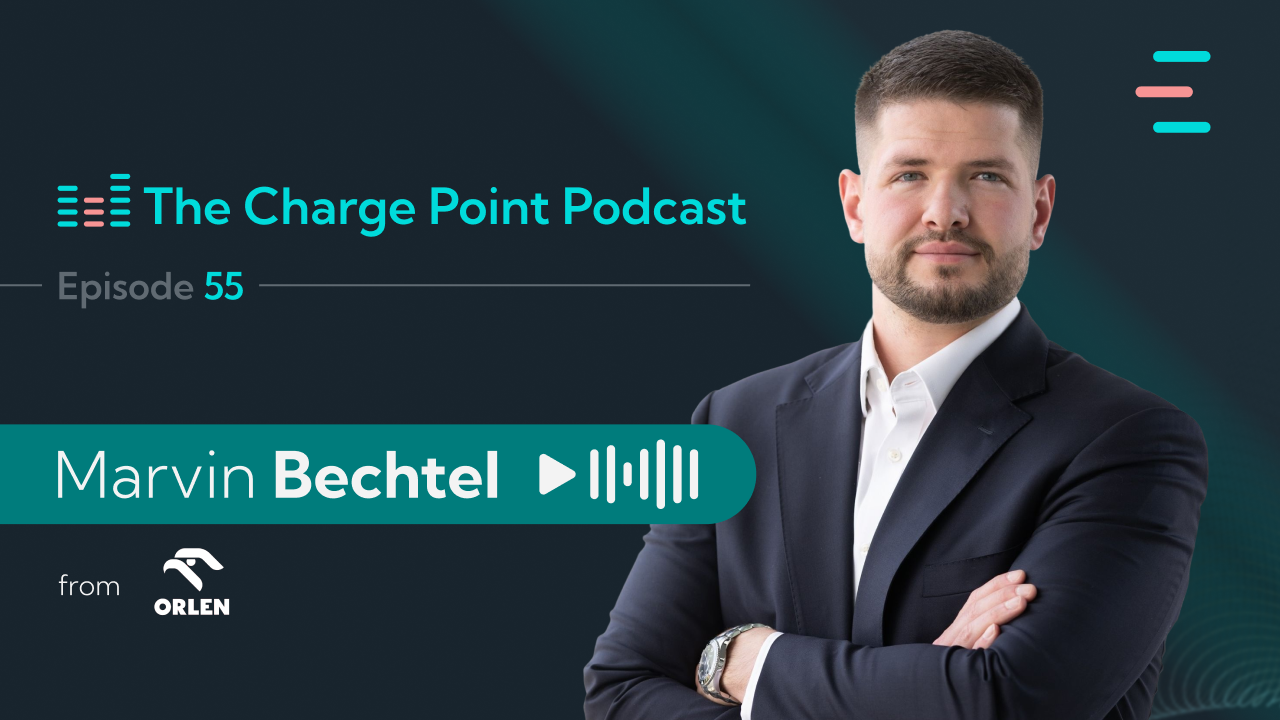
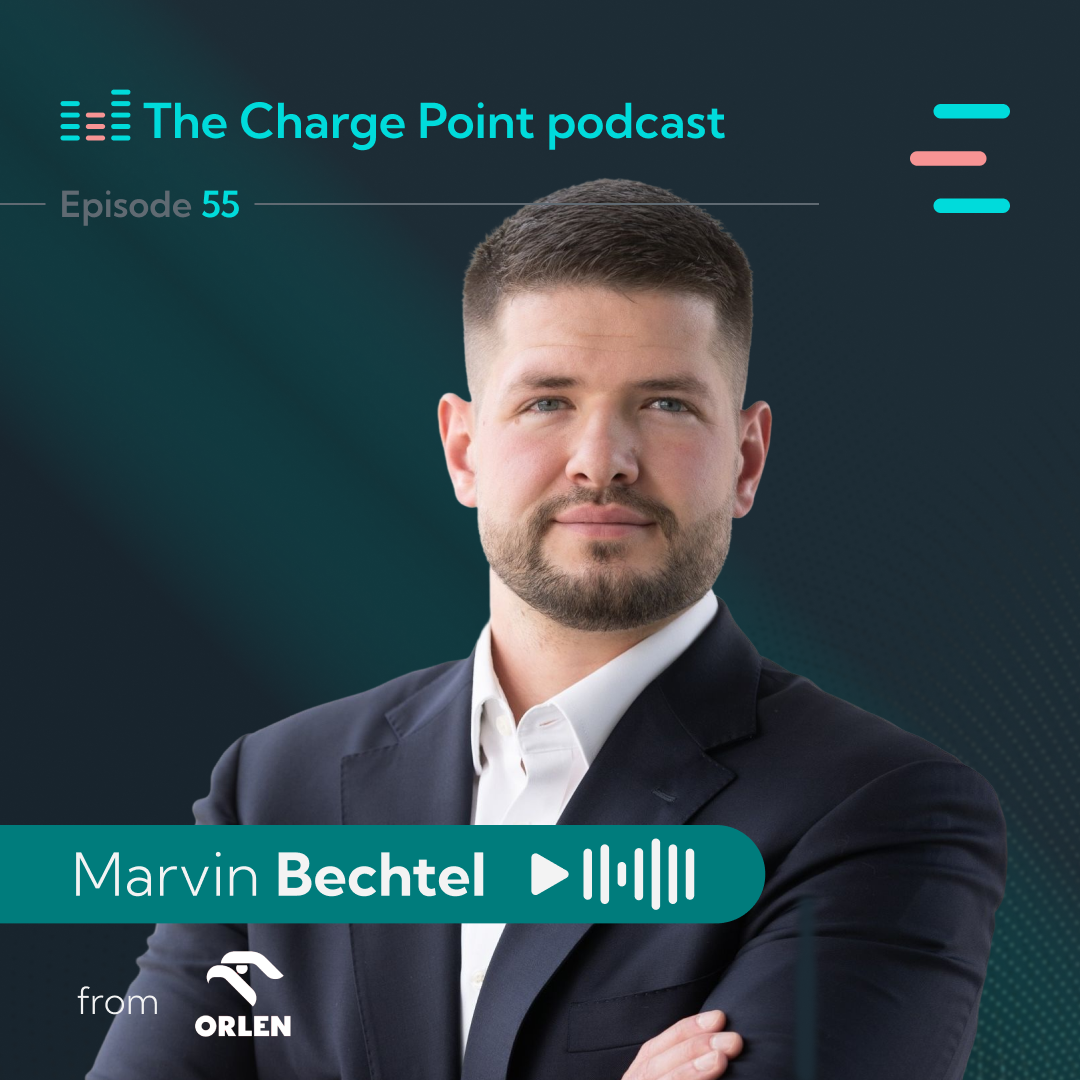
In a recent Charge Point Podcast conversation, Marvin Bechtel, responsible for ORLEN’s e-mobility business in Germany, shared five important lessons for Charge Point Operators scaling their networks.
1. The right EV charging location still comes first
Charging hardware, software and operational processes can all be improved. A weak location is much harder to fix.
As Marvin explained, “the best technology cannot fully compensate for a poor location.” Charging infrastructure must be deployed where drivers naturally travel and already have a reason to stop—whether at service stations, retail destinations, shopping centres or locations close to major roads.
Existing fuel retailers have a potential advantage here. They already possess well-frequented locations, recognised brands and established convenience offerings. However, not every petrol station will automatically make a strong EV charging site. Grid availability, physical space, traffic patterns and expected demand must all be considered.
2. Standardisation turns separate projects into a network
The challenges change when a CPO moves from operating 10 or 15 charging points to managing hundreds.
If every site has its own load-management system, technical design and operational workflow, complexity grows with every deployment. Teams must learn multiple platforms, contractors require different training, and negotiations with grid operators repeatedly start from scratch.
Standardisation replaces isolated engineering projects with a repeatable deployment model. It can reduce commissioning risk, simplify operations and help new sites go live faster.
This was a central reason for ORLEN’s decision to deploy FLEXBOX. The objective was to establish one standardised grid-interface solution capable of working across different German Distribution System Operators (DSOs). By integrating FLEXBOX into its supply chain and transformer-station configuration, ORLEN can create a clearer process for its internal team, suppliers, contractors and grid operators.
3. Commissioning is a business-critical moment
Commissioning may appear to be the final technical step in a charging-site project. In reality, it can determine whether months of development result in a functioning site—or another lengthy delay.
Grid-operator appointments can be difficult to secure. If commissioning fails, the CPO may need to request a new appointment and wait weeks or months before trying again.
Successful scaling therefore depends on more than selecting compliant equipment. Everyone involved must understand the solution, the responsibilities and the commissioning process before arriving on site.
4. Grid constraints require more than one plan
Even an excellent location may not receive the required grid connection. In the past, this could mean abandoning the project.
CPOs now have more alternatives. Dynamic load management can make better use of available capacity, while battery energy storage systems (BESS) can support high-power charging where the grid alone is insufficient. Combining charging infrastructure with BESS and solar generation could make previously unviable locations possible.
For large projects, the future approach may increasingly involve preparing several energy scenarios in parallel: the preferred grid connection, a lower-capacity alternative and a solution supported by storage and intelligent energy management.
5. Charging speed will not remain the main differentiator
High charging speeds attract attention today, but the technology is rapidly becoming standard. Over the next three to five years, more networks will offer 400 kW charging and beyond.
The competitive advantage will therefore shift towards the complete customer experience: reliable chargers, transparent prices, convenient locations, food and retail options, digital services and a consistent experience across the network.
Operational efficiency will matter just as much. The strongest CPOs will be those that combine customer-centric locations with high uptime, smart grid utilisation and disciplined cost management.
From installing chargers to building an operating model
The next phase of EV charging will not be won by deploying hardware alone. It will be won by building networks that can scale technically, operationally and commercially.
ORLEN’s experience shows that this requires five foundations: the right locations, standardised technology, reliable commissioning, intelligent energy management and a customer experience that gives drivers a reason to return.
Listen to Episode 55 of the Charge Point Podcast: How ORLEN Is Scaling Its EV Charging Network, featuring Marvin Bechtel.

What is Load Management and why is it essential for EV Charging
Explore the essentials of advanced Load Management in this guide. Uncover the complexities of integrating EV charging systems with existing power grids, a critical challenge in energy management. Discover how solid Load & energy management solutions ensure an efficient, secure, and scalable charging infrastructure.

Lectures intéressantes
Scaling EV Charging Without Scaling Complexity: Five Lessons from ORLEN
How Cheap Batteries Are Changing EV Charging Infrastructure - Interview with Ryan Fisher, BloombergNEF
.png)
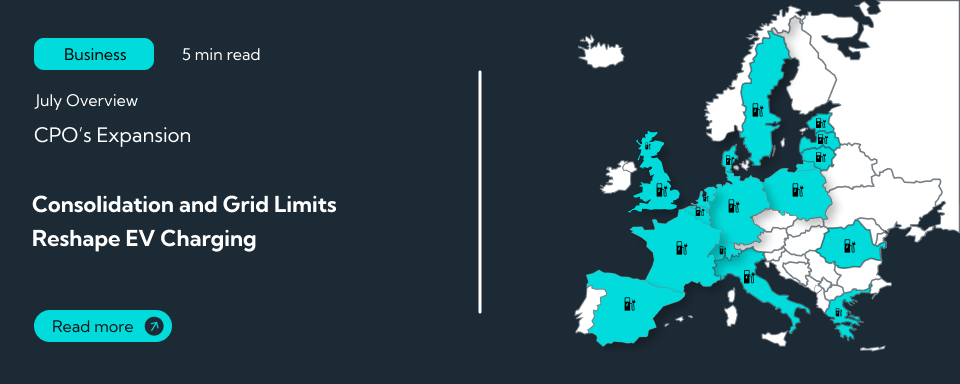
July 2026: Consolidation and Grid Limits Reshape EV Charging
.png)
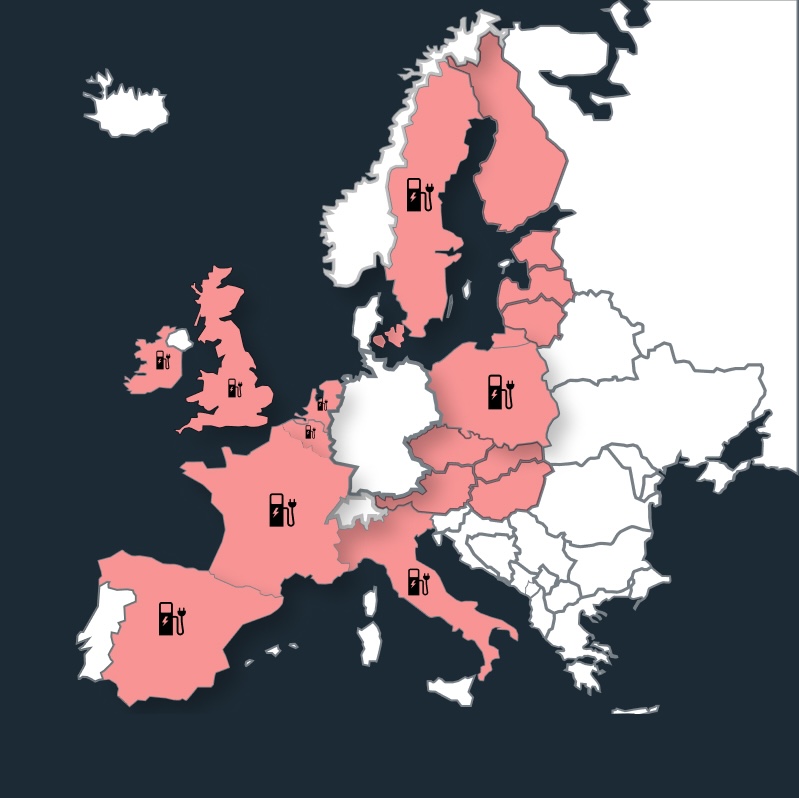
June 2026: Public Investment, Freight Charging and Smart Energy Reshape Europe's CPO Market

Get started with
FLEXECHARGE
Contact our team to learn more about what we can help you achieve with our open, vendor agnostic platform and powerful solutions.