Multi-market scalability
Bring energy management into the systems you already run, in every market.
The problem
Your systems run the network. Your tools should too.
Large operators run their network from their own software, not from vendor screens. Every extra interface becomes a second source of truth.

A dashboard per market
Each country or acquired network arrives with its own tool, and your data ends up spread across them.

Events you see too late
Faults and load signals sit in a dashboard until someone looks.

Setup that doesn't scale
Configuring sites one by one in a UI slows every rollout.
How we solve it
Two ways to get more
from the same connection
01.
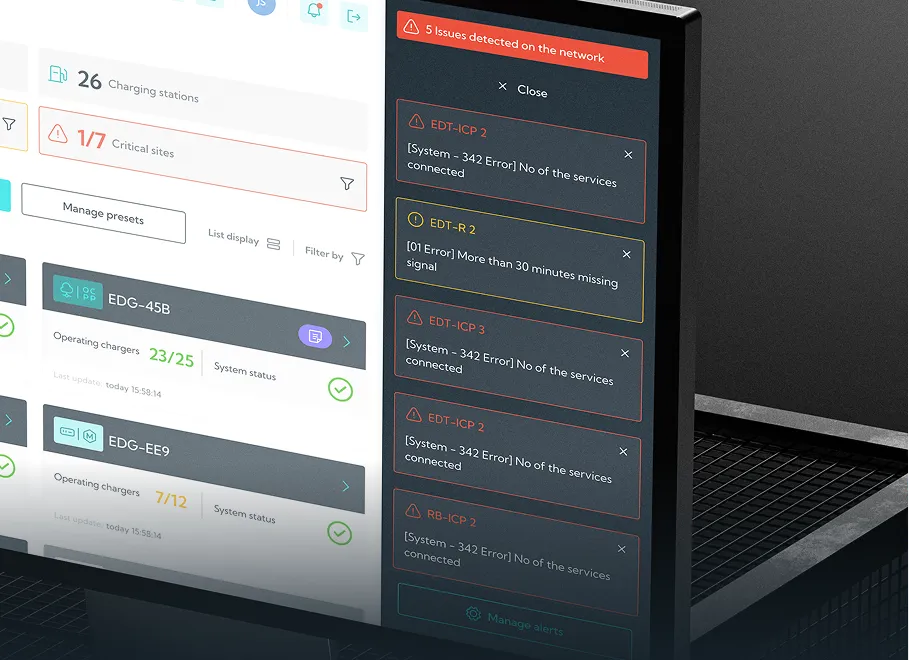
Push Notification System
02.
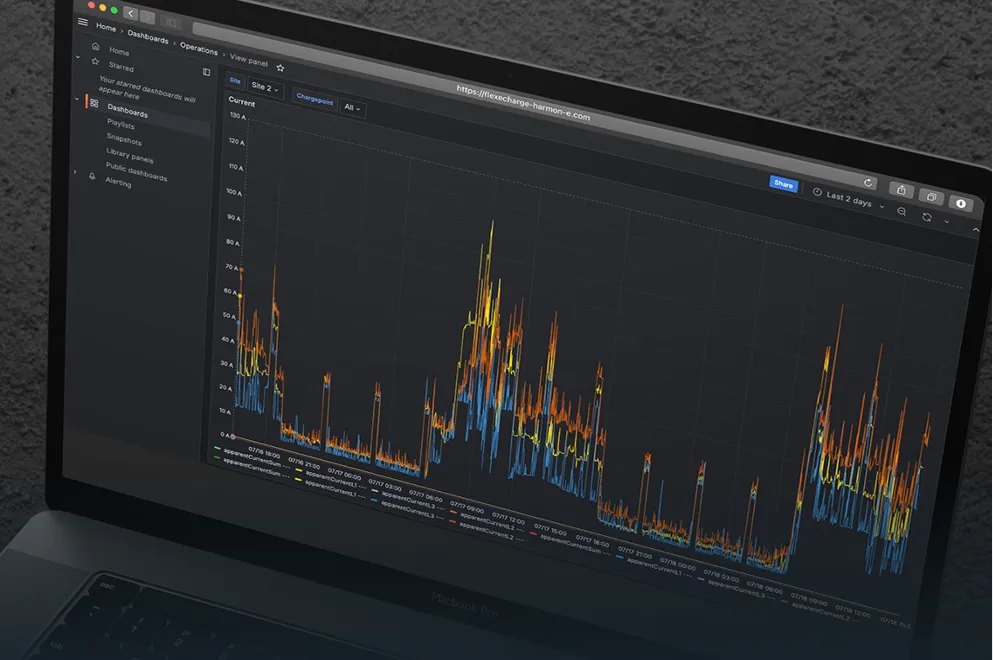
HARMON-E Datalake
03.
Configuration API
Capabilities
What makes it work

Events on your terms
Events arrive at a webhook endpoint you own. Subscribe per event type and channel, and feed them into ticketing, monitoring or AI agents.

Your data, your tools
Query the raw data with SQL, pull it through the API, or plug in PowerBI and Grafana. No export jobs, no CSV files. Link: API documentation.

Bulk configuration by API
Bring hundreds of sites live in one run. Every site setting goes through the API: same script, same result, every time.

Ready for AI agents
Your BI and your AI agents read and write through one API surface, with customer authentication on every request.
More features behind the solution

Data brokerage
Setpoints, OCPP data and DER data from meters, batteries and solar, via API and MQTT

Independence and reliability
Highly available OCPP endpoints that work independently of any CPMS, with a dedicated broker per charging station

System Health
Charging Analytics spots anomalies for maximum uptime; Alerts reach you via HARMON-E, email or API

IT security
WSS connections, TLS with client-side certificates and multi-factor platform access
CPMS switching
Change CPMS by updating the WebSocket URL; the charger connections stay with HARMON-E
What it works with
CPMS & Brokers
And other specialised software
CPMS & Brokers partners







Where it makes the difference
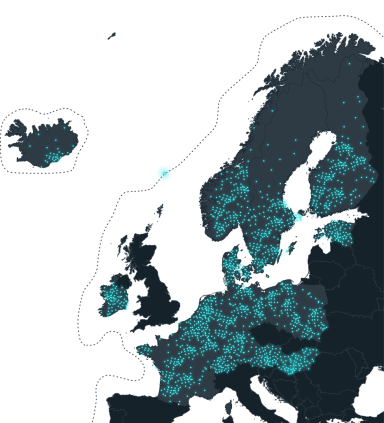
Expanding into a new country
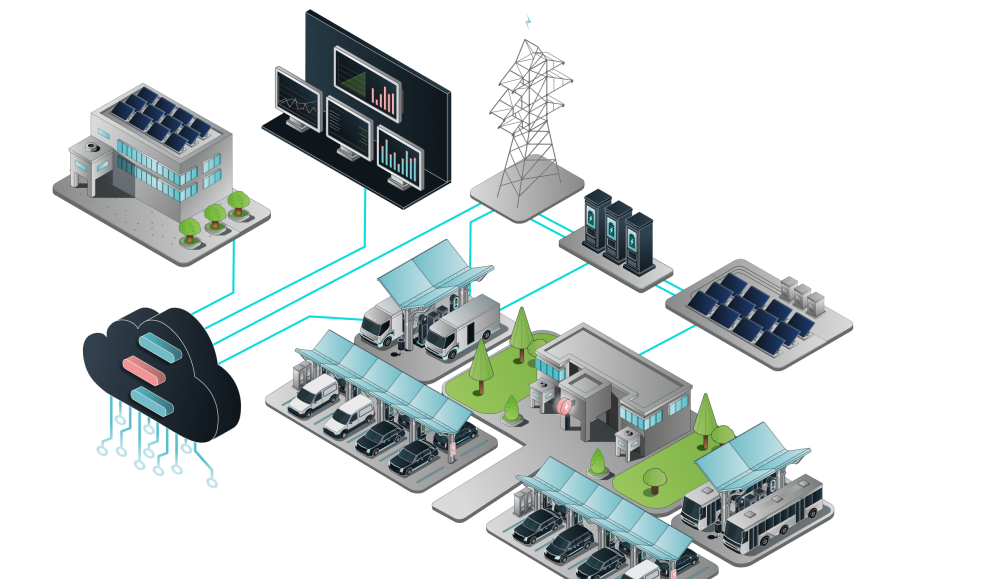
New hardware partners and grid operators, the same energy layer and the same data
Teams that live in their own backend
Energy management runs inside the operator's systems, not next to them.
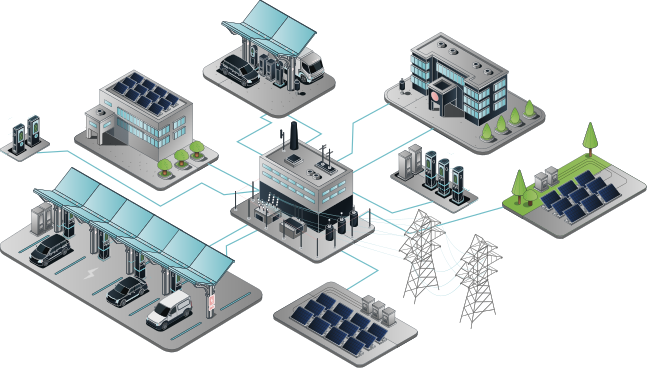
Networks brought together after growth or acquisition
Different CPMS and charger brands, one data layer underneath.
New grid rules in a new country
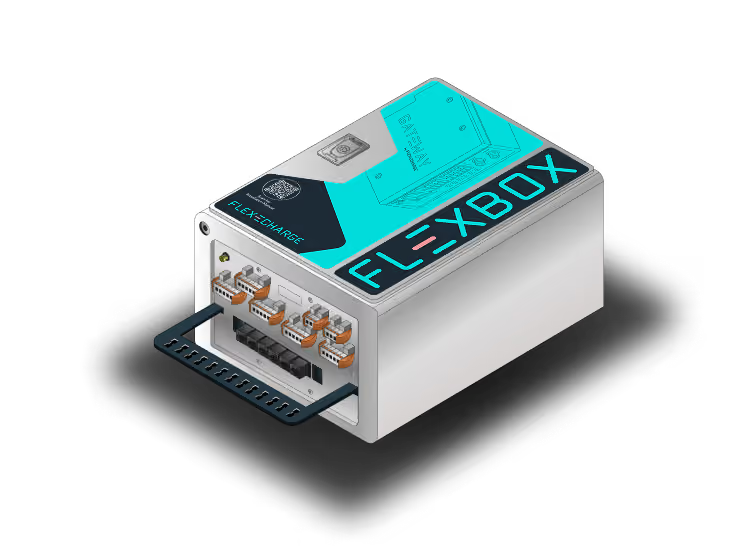
FLEXBOX gives each site a standard local interface to the DSO, so you don’t redesign sites around every national control requirement.
Proof
Operators running it today



Go deeper
Learn more about load management
Webinar
Masterclass
The Power of HARMON-E Headless

Webinar
Masterclass
Match control to each site
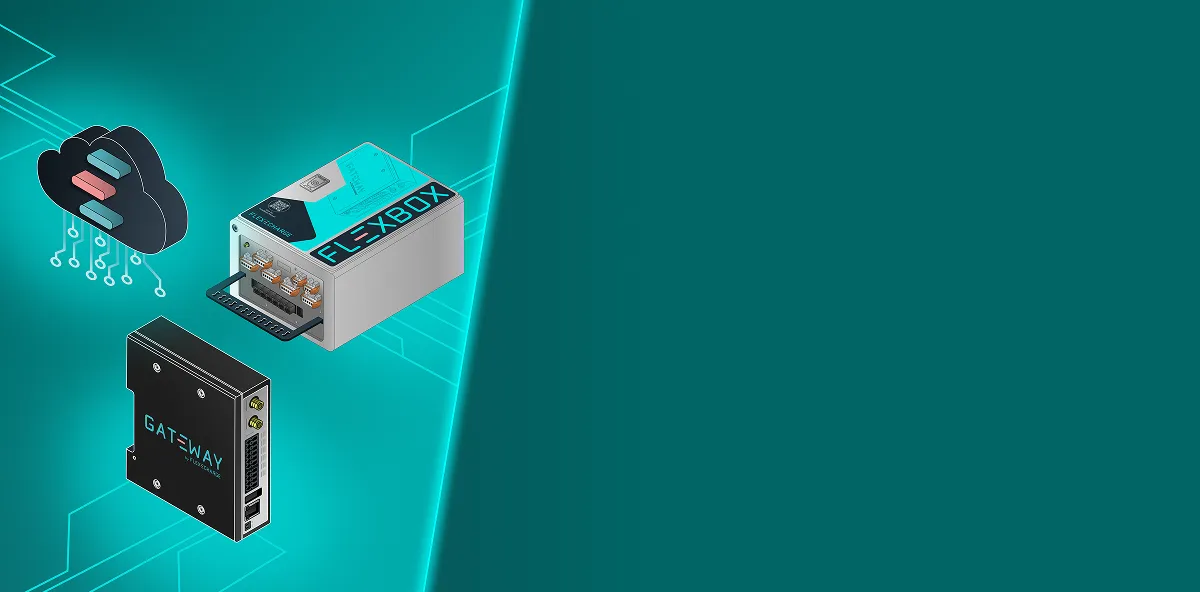
Webinar
Masterclass
Broker architecture: connect any CPMS and service
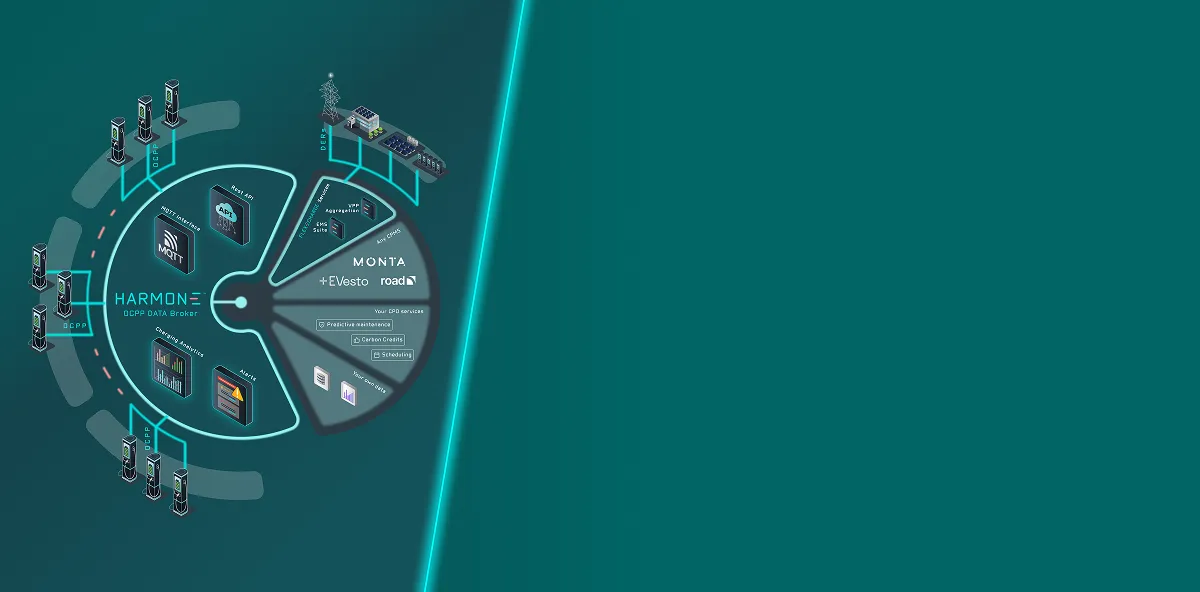
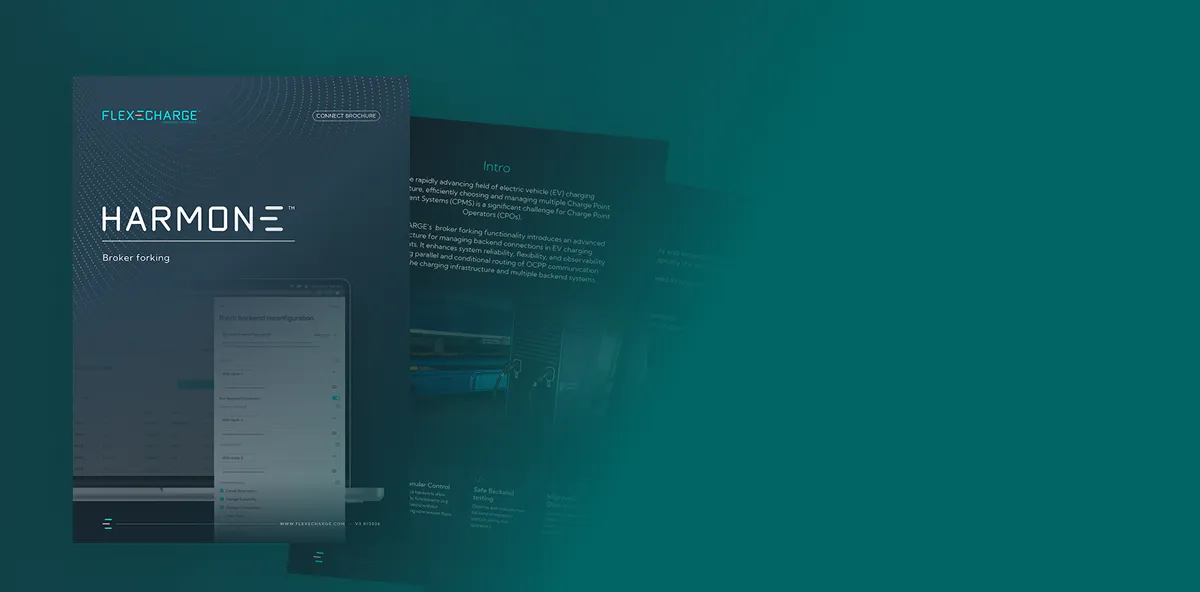
Keep Charging Live with Broker Forking
Questions operators ask
What does headless energy management mean?

Energy management runs in the background and is controlled through APIs from your own systems, instead of through a separate platform your teams have to log into.
Which events can our systems receive?

You choose per event type and channel, for example assets offline or malfunctioning, maximum charge power allocations, DSO or BSP events and the reason for a curtailment.