
How Battery Energy Storage and Virtual Power Plants Are Redefining CPO Profitability
How BESS and VPP Technology Are Transforming the Economics of EV Charging
Europe’s EV charging landscape is reaching an important moment. While adoption accelerates the grid, especially in the Netherlands, Nordics, and Germany, is hitting hard limits: lack of capacity, multi-year connection delays, and rising peak demand costs. Yet a new model is emerging, one that reframes charging infrastructure not as a passive load, but as an active, revenue-generating grid asset.
The pairing of battery energy storage systems (BESS) and Virtual Power Plants (VPPs) is redefining how charge point operators (CPOs) plan, operate, and monetize their networks. Together, they unlock new flexibility markets, relieve local grid congestion, and create a stable path toward profitable high-power charging growth.
Understanding Virtual Power Plants (VPPs) and how flexibility markets operate
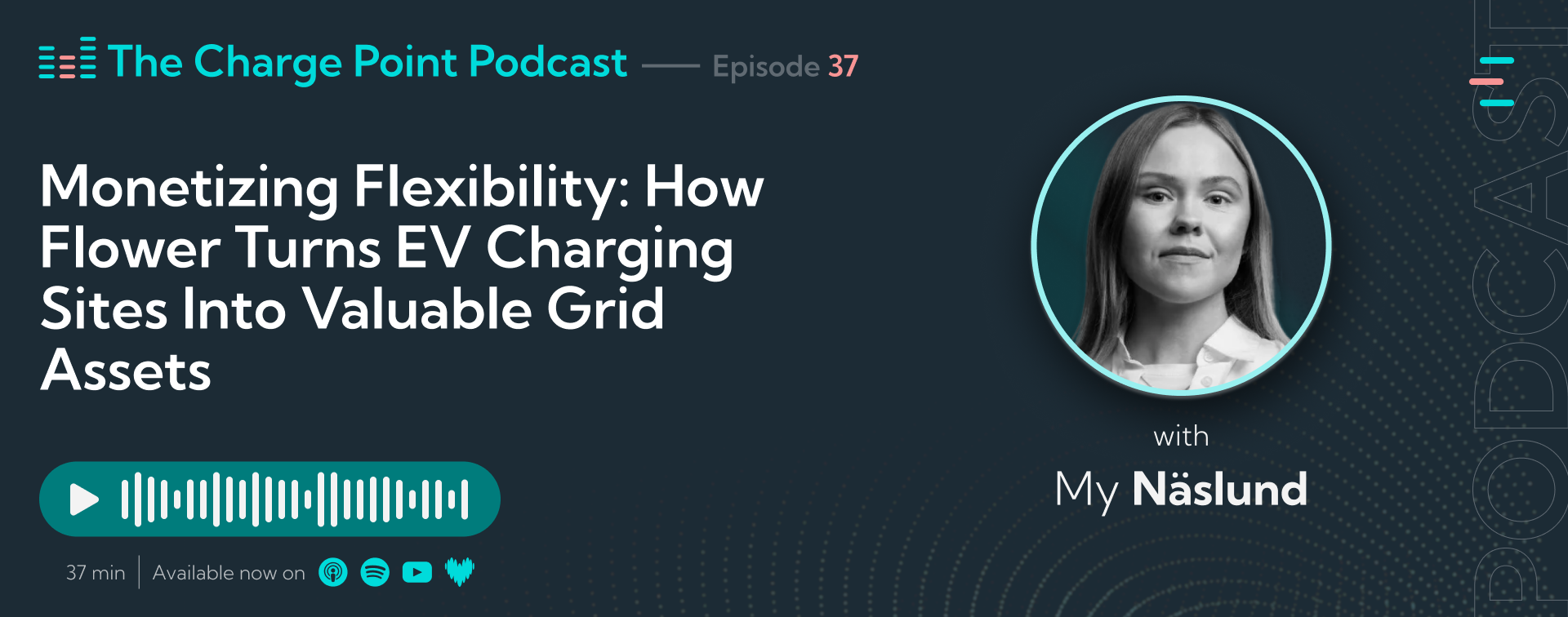
A Virtual Power Plant aggregates distributed assets such as co-located battery storage, solar, wind, or EV chargers and coordinates them as a single, dispatchable unit. As My Näslund, Business Developer at Flower, explains a VPP is “a digital platform, that connects different energy assets and coordinates them to act like one big flexible power plant.”
This aggregated capacity is traded on flexibility markets that maintain Europe’s power system stability at around 50 Hz. Transmission system operators operate frequency-based markets like:
- FFR (Fast Frequency Response)
- aFRR/MFRR (Automatic or Manual Frequency Restoration Reserves)
Meanwhile, DNOs/DSOs manage local flexibility markets, designed to alleviate grid congestion, an increasingly important revenue opportunity for CPOs in dense urban or capacity-constrained regions.
Common misconceptions about VPP participation for CPOs
Despite the benefits, many Charge Point Operators remain unsure about VPP participation. Common misconceptions include:
- Fear that activation will disrupt drivers
- Belief that assets are activated constantly
- Concerns about technical complexity
Operational data disproves these assumptions. Näslund notes that over a full year, “the total activation time…was like three to four days in total,” around 1% of annual time, while operators are still paid for availability.
As Näslund emphasizes: “What used to be just an energy-consuming unit that drives costs can now instead become a revenue stream and a grid-supporting asset… The tech is finally ready, and flexible demand like EV charging is crucial to maintain system balance.”
This reinforces how EV charging has fundamentally shifted from a passive energy load to an active flexibility resource.
How VPPs and BESS create new revenue streams for Charge Point Operators
Flexibility trading is emerging as an attractive revenue stream across Europe’s evolving markets.
In Sweden’s E.ON SWITCH local flexibility market:
- 300 kW of flexible capacity
- 60 hours of availability
- Generates roughly €5,500
- Plus activation payments of ~€400/MWh
These numbers illustrate the real commercial potential of flexibility participation.
Using VPPs and BESS to overcome grid constraints in Europe’s EV charging network
Grid congestion has become one of Europe’s most significant barriers to high-power charging rollout. Local flexibility markets were created specifically to help DSOs ease bottlenecks in critical regions.
EV charging infrastructure, and especially BESS, are ideal flexibility resources. As Näslund explains, charging assets “can pause or reduce their consumption and thereby reduce the load on the grid.”
This makes EV charging a powerful tool for grid resilience.
Case Study: How Recharge uses BESS and VPP integration to boost site profitability
Recharge, the Nordics’ largest high-power charging network, is launching two Swedish BESS pilots:
- Västerås (with ENICO)
- Malmö (with Polarium)
Both integrate co-located batteries into Flower’s VPP as BRP, enabling Recharge to optimize storage systems while accessing flexibility revenues.
This exemplifies the rising trend of value stacking, combining operational savings, grid support, and flexibility income.
Technical requirements CPOs must meet to join a Virtual Power Plant
To participate, CPOs need assets that meet:
- Minimum bid thresholds:
- 0.1 MW for FCR/local flex
- 1 MW for MFRR
- Activation speed obligations:
- 1 second (FFR)
- 15 minutes (MFR)
- Bidirectional capability (charge + discharge) for some markets
- Reliable connectivity
- BESS energy management systems
Batteries excel here; EV chargers can participate in many markets, and V2G will expand eligibility further.
Why energy management platforms like FLEXECHARGE HARMON-E are key to VPP integration
Connecting thousands of chargers to a VPP is complex unless a unifying platform exists. This is where FLEXECHARGE HARMON-E becomes important.
As Näslund explains: “You have a lot of different CPOs connected and each has chargers from different brands… By integrating with your platform, we can reach a wide charging network instead of building a separate integration for every brand.”
HARMON-E enables:
- Fast VPP onboarding
- Reliable sub-second activation
- Protection against non-delivery penalties
- Consistent EV driver experience
- Easy participation for smaller CPOs
Why VPP and BESS integration is becoming essential for the EV charging industry
BESS and VPP integration are becoming foundational layers of Europe’s charging ecosystem. They:
- Support renewable integration
- Reinforce local grid stability
- Generate new revenue streams
- Reduce operational costs
- Enable faster expansion of HPC hubs
Näslund summarizes this perfectly: “As a CPO, you have a lot of flexible assets you can use to support the green energy transition and, at the same time, you can make money… The technology is ready. So what are you waiting for? You’re leaving money on the table.”
Listen & Learn More
To explore how your charging network can leverage BESS and VPP participation for new revenue, stability, and smarter operations:
👉 Listen to Episode 37 of The Charge Point Podcast

What is Load Management and why is it essential for EV Charging
Explore the essentials of advanced Load Management in this guide. Uncover the complexities of integrating EV charging systems with existing power grids, a critical challenge in energy management. Discover how solid Load & energy management solutions ensure an efficient, secure, and scalable charging infrastructure.
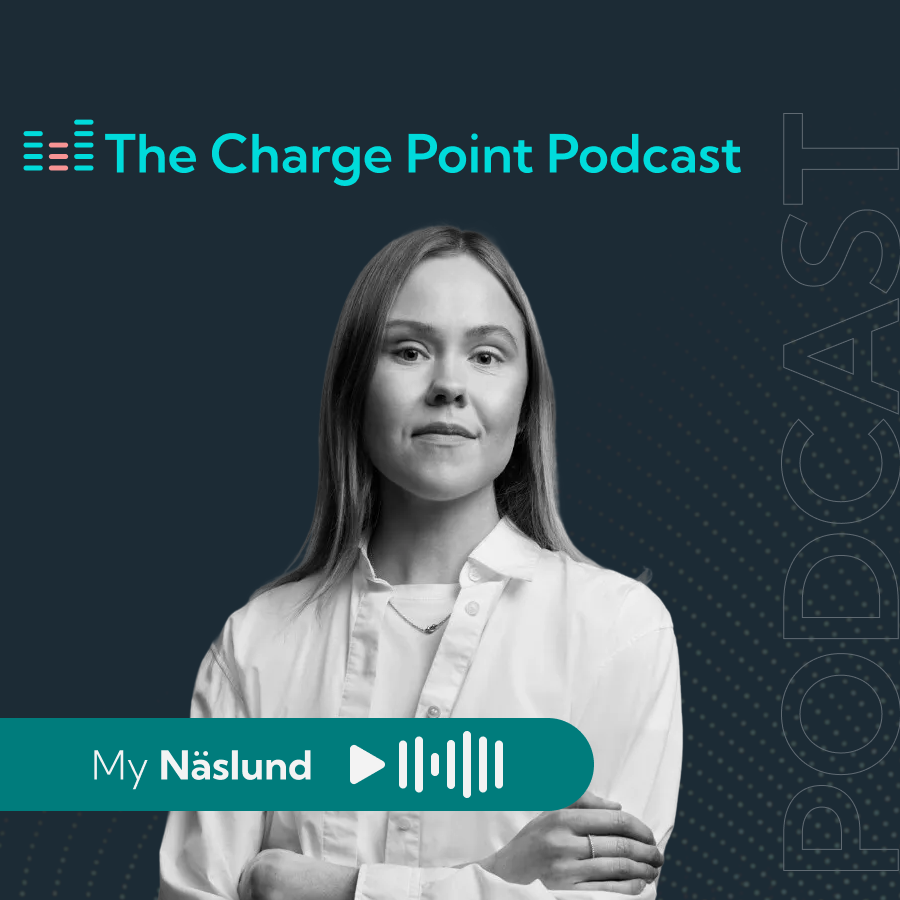
Episode 37 – Monetizing Flexibility: How Flower Turns EV Charging Sites Into Valuable Grid Assets
Discover how BESS and Virtual Power Plants unlock new revenue streams, reduce grid constraints, and elevate EV charging profitability
Lectures intéressantes
Scaling EV Charging Without Scaling Complexity: Five Lessons from ORLEN
How Cheap Batteries Are Changing EV Charging Infrastructure - Interview with Ryan Fisher, BloombergNEF
.png)
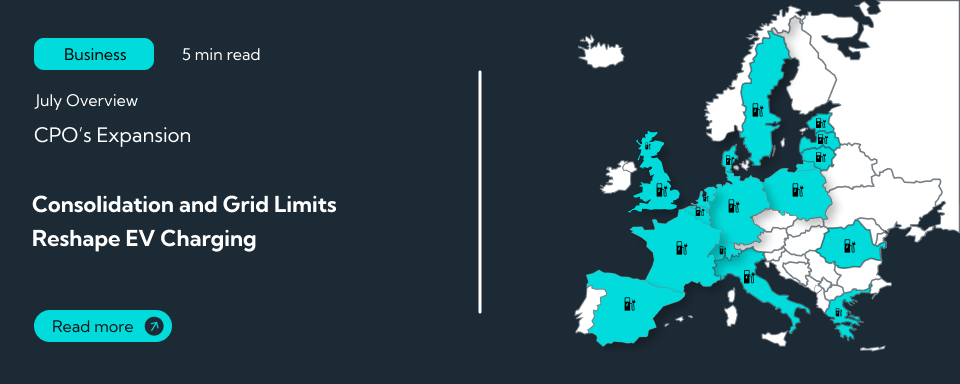
July 2026: Consolidation and Grid Limits Reshape EV Charging
.png)
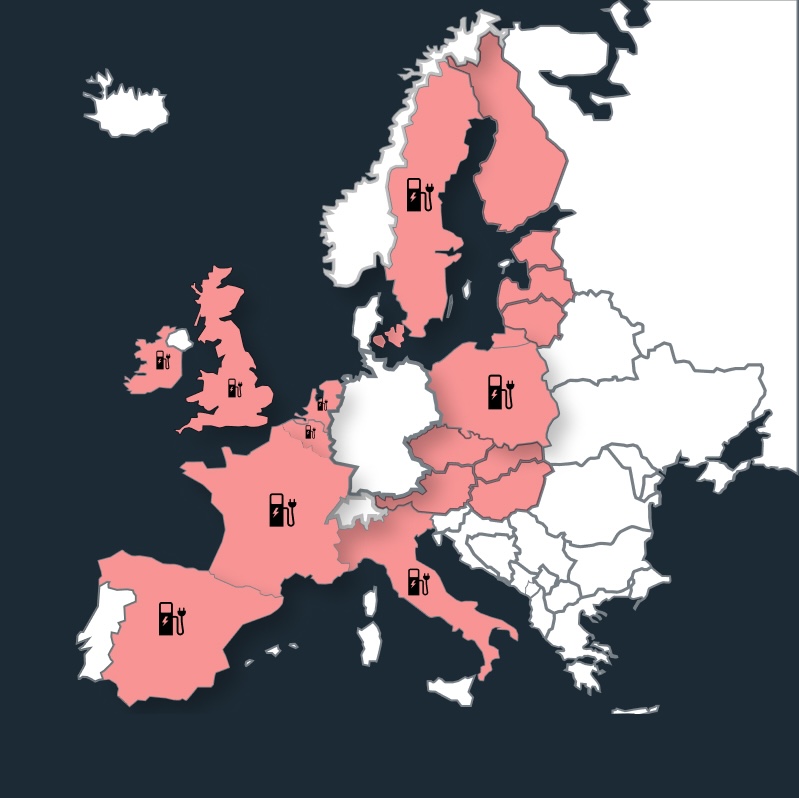
June 2026: Public Investment, Freight Charging and Smart Energy Reshape Europe's CPO Market

Get started with
FLEXECHARGE
Contact our team to learn more about what we can help you achieve with our open, vendor agnostic platform and powerful solutions.