
The  platform
The energy-management platform large charging networks build on
HARMON-E brings every site, charger brand, battery, grid operator and backend system together. Operators like Circle K use it to manage energy across countries, whether in the cloud, on site, or headless through APIs inside their own tools.

Everything in the network connects to one platform
New countries bring new charger brands, new grid operators and new systems.
They all connect to HARMON-E the same way, so expanding into a new market doesn’t mean starting over.

Charging and energy assets
Charging and energy assets
Chargers, batteries, PV and power meters connect over OCPP, Modbus or MQTT, regardless of manufacturer. Modbus devices come from a validated list, so every integration is proven before it goes live.


Grid operators
Grid operators
Each site have a standard local interface to the DSO, using protocols such as IEC 60870-5-104 and OpenADR. Sites don’t have to be redesigned around each national rule.


Backend systems
Backend systems
Site and energy data flows to the CPMS and other services in real time. If you change CPMS, the chargers stay connected and you only update one WebSocket URL.


Energy markets
Energy markets
Batteries and flexible load connect to BSPs and BRPs for scheduling, dispatch and settlement

Our intelligence
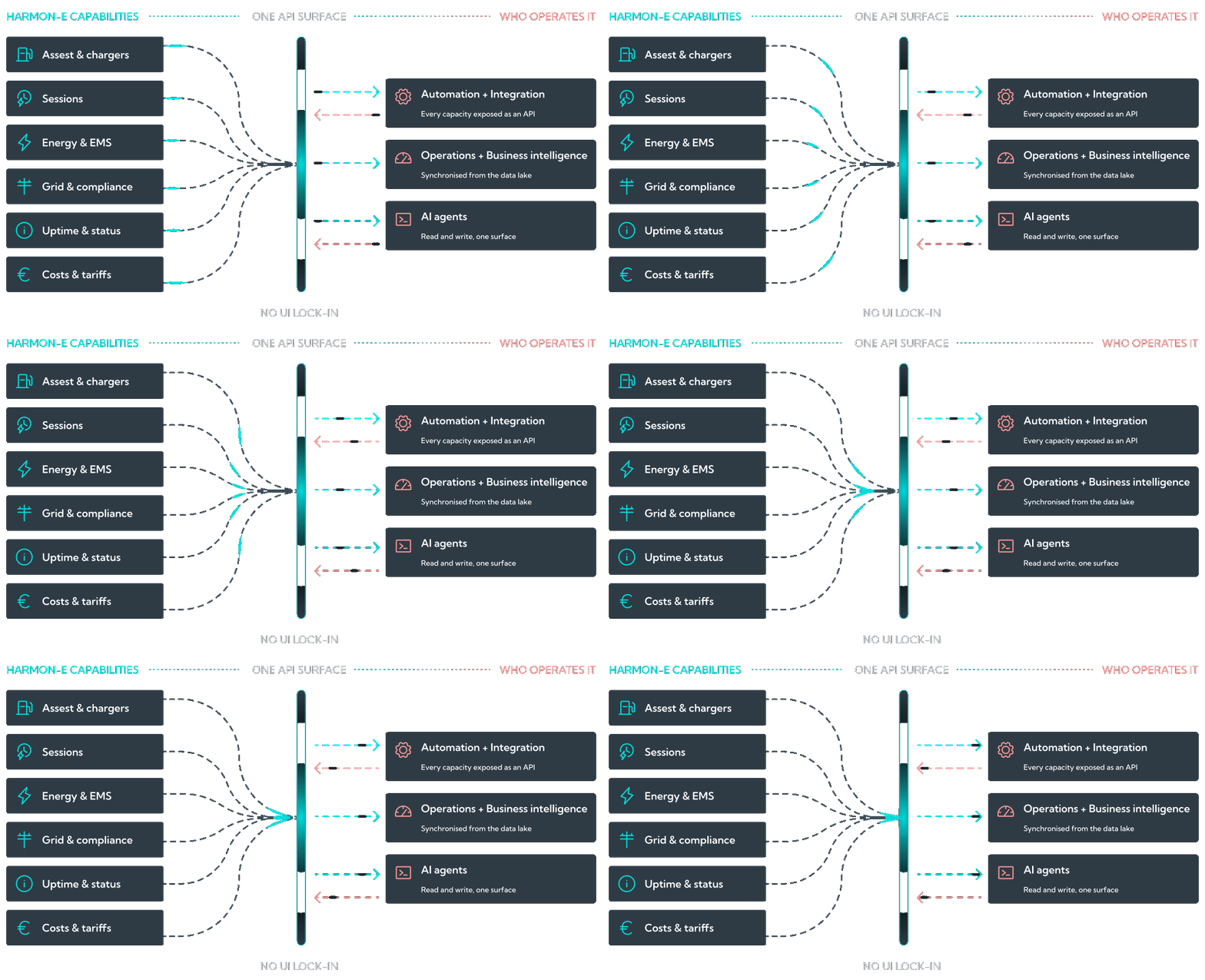
Everything HARMON-E does is available through
API, from site limits and charging priorities to
battery dispatch and alerts. Teams can work
in the HARMON-E interface.
Your interface
Or they can stay in their own CPMS and tools while
HARMON-E manages energy in the background.
Either way, there is no extra platform
for operators to learn.
Rollout across many sites
The same setup on every site
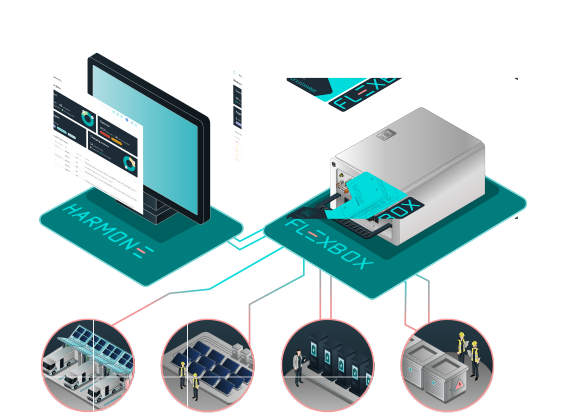
FLEXBOX and HARMON-E can become standard equipment across the network.
Every site follows the same design, so new sites take less engineering and less time to go live, and they are easier to support once they run.
Load and energy management runs in the cloud or locally on a GATEWAY or FLEXBOX.
With local hosting, sites keep running if the internet connection drops.
Part of the Eneco group
Security that IT teams can sign off on
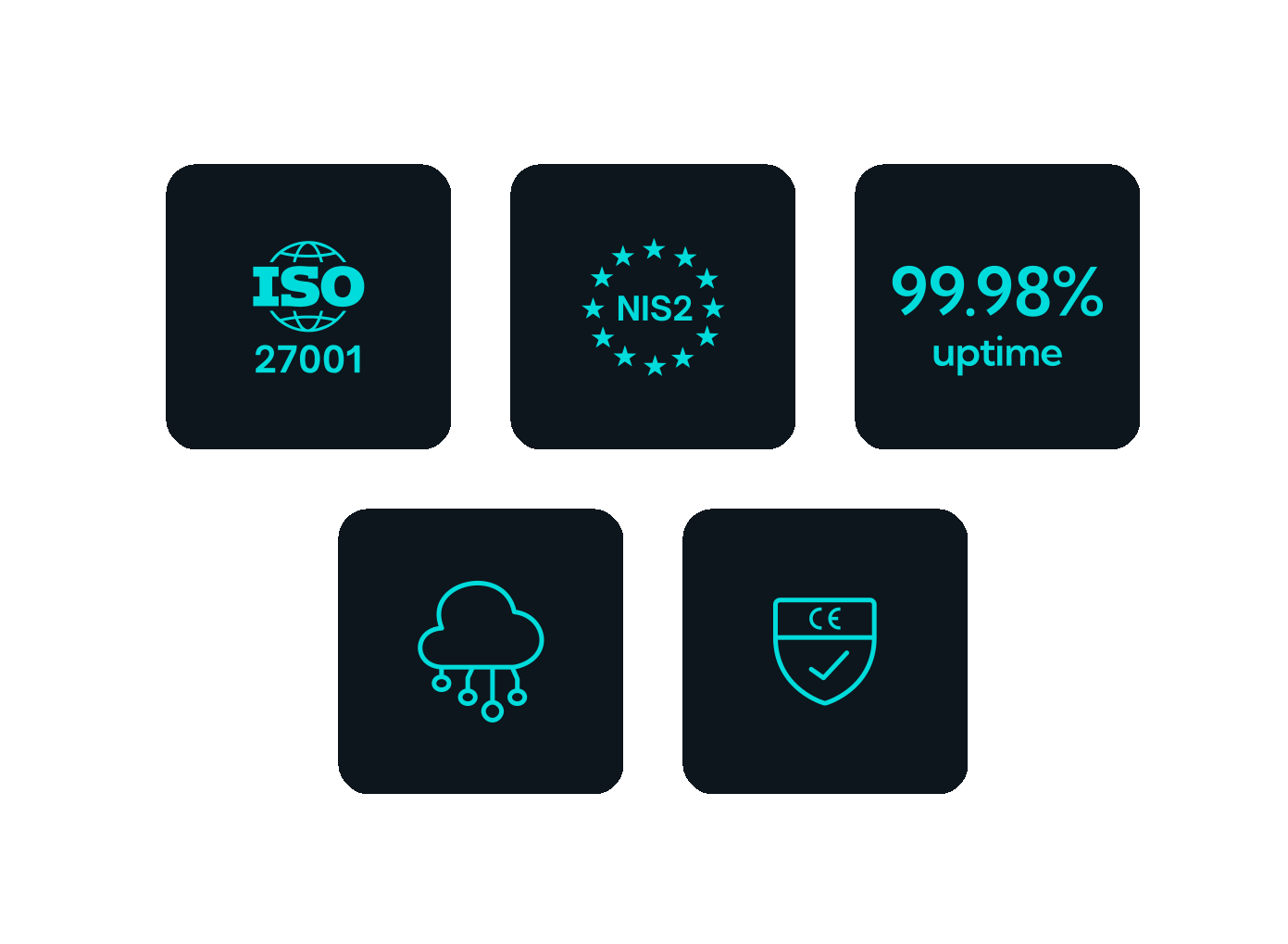
HARMON-E is built to meet ISO 27001 and NIS2 requirements, and its hardware and software
are designed for the EU Cyber Resilience Act, so security reviews don't hold up a rollout.



FAQ
Can HARMON-E run inside an existing CPMS?

Yes. Every HARMON-E function is available through API, so operators can keep working in their own CPMS while HARMON-E handles load and energy management in the background.
Which charger and battery brands does HARMON-E support?

HARMON-E is vendor-agnostic. Chargers connect over OCPP, and batteries, PV and power meters connect over Modbus or MQTT. Modbus devices come from a validated list of supported devices, so every integration is tested before it goes live.
How does HARMON-E handle different DSO requirements across countries?
HARMON-E connects to grid operators through standard protocols such as IEC 60870-5-104, either locally or through the cloud. Locally, the FLEXBOX provides the Modbus and digital and analogue I/O connections for on-site grid equipment. Through the cloud, HARMON-E can be monitored and controlled via OpenADR. This lets you meet each DSO’s requirements without redesigning every site.
Does HARMON-E keep working without an internet connection?
Yes, when load and energy management runs locally on a GATEWAY or FLEXBOX. The site keeps full functionality during an outage, and you still have central management and remote access once the connection is back.
See how HARMON-E fits into your architecture
Share your current setup and expansion plans, and our solutions team will walk you through the deployment, integration and security options for your network.