Episode 57
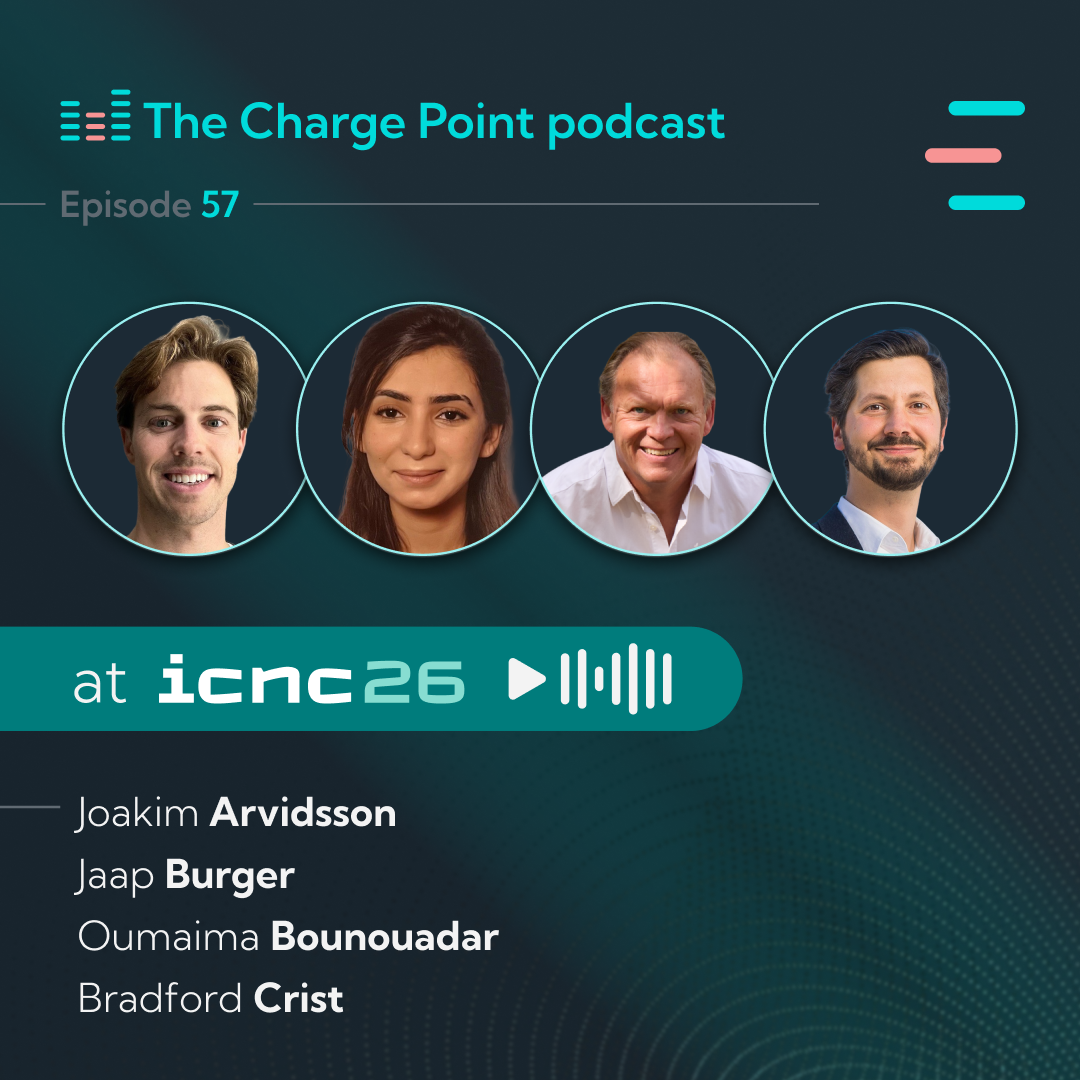
Episode 57 – Building the Open Smart Charging Ecosystem: 4 Voices From ICNC 2026 Berlin
Grid Costs, AI Support, and Real Interoperability
EV charging infrastructure has largely solved the problem it set out to solve — the chargers exist, the networks work, drivers can find a plug. The harder question now is what happens next: does the system actually pay off, does it scale, and does it talk to itself across grid, software, and hardware boundaries.
That question sat at the center of ICNC26 in Berlin this September, where the show's official theme — "Collaboration at Scale: Establishing the Open Smart Charging Ecosystem" — pushed the industry to treat interoperability as something bigger than plugs and protocols, extending it into grid data, smart charging, and the wider energy-mobility convergence.
Christophe Lephilibert recorded four short conversations live on the ICNC26 show floor to unpack that theme from four different angles: Joakim Arvidsson, co-founder of Peak Energy, on the hidden complexity of grid connection costs; Bradford Crist, CEO and co-founder of ChargeMate, on AI-driven driver support built for revenue recovery rather than just cost-cutting; Oumaima Bounouadar, co-founder and CEO of OCPP Lab, on why component-level testing isn't enough to catch real-world interoperability failures; and Jaap Burger, an independent EV grid-integration consultant, on the gap between technical maturity and the regulatory conversation CPOs still aren't having.
Four different problems, one shared thread: building an open ecosystem is less about a single breakthrough and more about a lot of unglamorous, necessary plumbing work across cost, testing, support, and policy.
What You Will Learn in This Episode
This episode covers four distinct but connected angles on building an open, collaborative EV charging ecosystem:
- Why grid connection fees and peak charges are scattered, non-standardized, and genuinely difficult to track across different DSOs.
- How the market's priorities have shifted from fast hardware rollout, to reliability and UX, to today's focus on cost and profitability.
- Why AI-driven driver support should be judged on revenue recovery and retention, not just on reducing support costs.
- What a continuous, automated approach to OCPP/OCPI interoperability testing looks like, and why manual testing can't keep up.
- Why testing individual components isn't enough — many real issues only appear when systems interact across a driver's full charging journey.
- Why so few charge point operators bring their grid-flexibility value directly to regulators and DSOs, despite it being a real revenue opportunity.
- Where real-world vehicle-to-grid deployment actually stands today versus where the industry expected it to be two years ago.
Expert Insight
"There's a lot of people able to offer lower costs with AI tools. That's cost of entry. What we're really focused on is providing an experience that recovers revenue and retains customers."
— Bradford Crist, CEO & Co-founder, ChargeMate
Listen for free wherever you get your podcasts