Episode 63
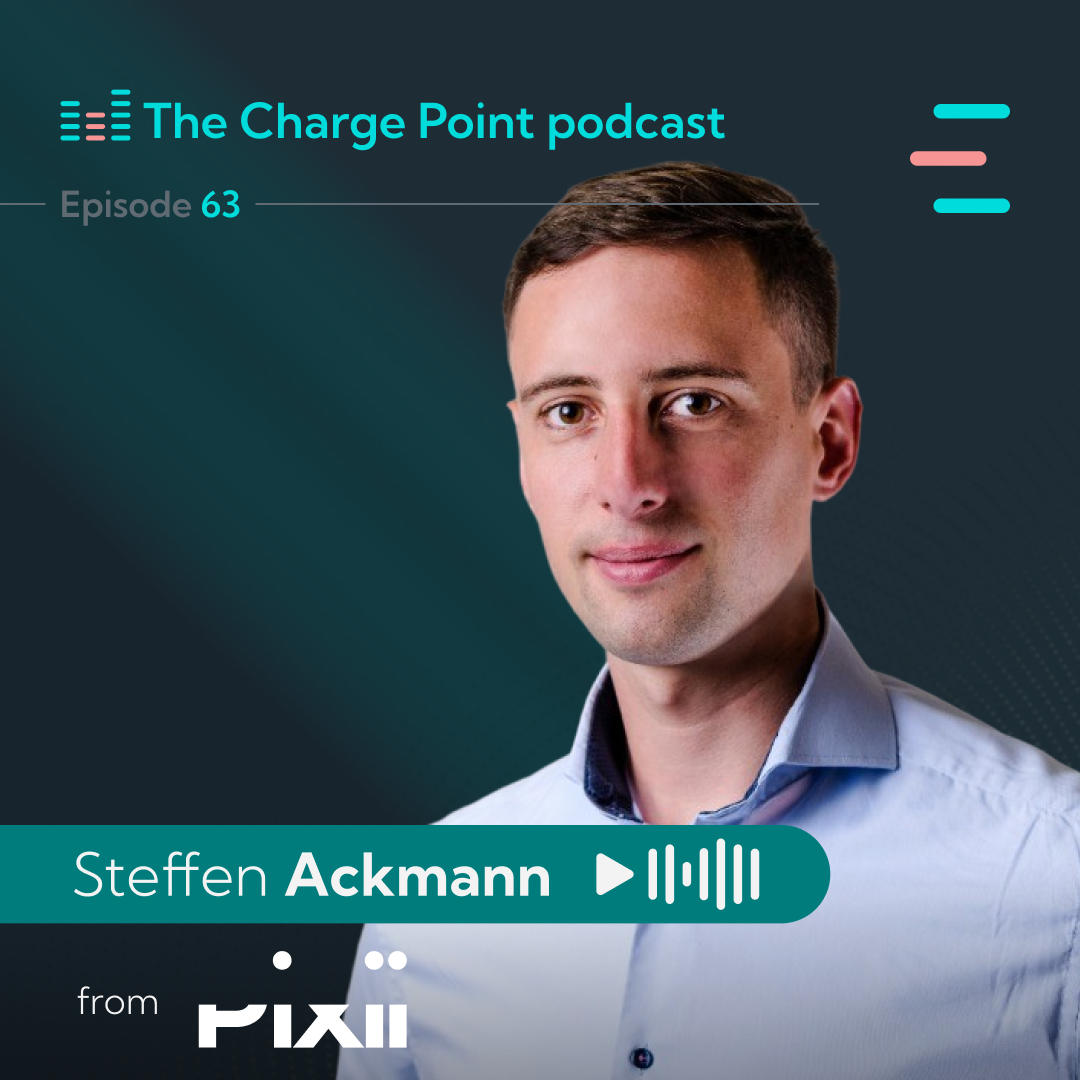
Episode 63 – How to Size Battery Storage for EV Charging Sites – with Pixii
Right-Sized Batteries, Smarter Sites
Grid connections are becoming the bottleneck for EV charging across Europe. In markets like the Netherlands and Germany, CPOs wait for capacity while demand for high-power charging keeps growing. Battery storage has become a common answer, letting sites deliver more power than the grid connection alone allows.
Timing matters. Battery cell prices have dropped sharply over the past two years, and new grid tariff rules reward sites that can shift their peak. The business case is no longer only about savings: batteries can now also earn revenue on flexibility markets. That makes sizing the battery correctly a strategic decision, not a technical detail.
Christophe Lephilibert speaks with Steffen Ackmann, Key Account Manager for EV Charging at Pixii. Pixii is a Norwegian battery storage company with roots in power systems for telecom and data centres. It focuses on the power conversion system and works with several battery pack suppliers. Steffen has worked in EV charging since 2017 and now advises CPOs, depot operators and fleet owners across Europe.
The result is a practical guide to matching battery storage to the site, whether that's a highway location, an urban hub or a bus depot.
What You Will Learn in This Episode
Steffen shares what Pixii has learned from battery projects with CPOs and depot operators across Europe:
- Why grid constraints, cheaper cells and new tariff rules have turned batteries into a strategic asset for CPOs
- Which site factors decide battery size: grid capacity, the number of charge points, simultaneous power and solar production
- Why a C-rate of 0.5 is often the most attractive choice, and when highway sites, urban hubs and depots need something different
- How the business case has moved from savings alone to revenue from flexibility markets and arbitrage
- Why many larger CPOs prefer standalone batteries over battery-integrated chargers, and how Pixii's Powerbase EV combines a charger and storage on one base
- What role the energy management system plays on complex sites, from prioritising MCS chargers to coordinating solar and storage
- Why DC-coupled architectures promise higher efficiency, and how Pixii is already piloting one with a customer
Expert Insight
"It depends on the capacity they have from the grid and the number of chargers they want to deploy. In urban sites, higher C-rates are quite often required by customers. And in depots, that can be between 0.x and 1."
- Steffen Ackmann, Key Account Manager EV Charging, Pixii
Listen for free wherever you get your podcasts