
April 2026: Megawatt Charging Corridors and Smart Grid Integration Transform Europe's EV Landscape

April 2026: Megawatt Charging Corridors and Smart Grid Integration Transform Europe's EV Landscape
April 2026 marked a decisive shift toward infrastructure maturity across Europe's EV charging sector. From Milence's demonstration of the continent's first operational 1,000 km electric freight corridor between Paris and Berlin, to the rollout of 1.2 MW truck charging systems and Sweden's 200-charger V2G pilot, the month showcased both the scaling of heavy-duty electrification and the growing sophistication of grid-integrated charging solutions. Retail partnerships, urban expansion, and manufacturing localisation further reinforced the sector's evolution from deployment-focused growth to strategic, high-utilisation infrastructure development.
Multi-Regional / Europe-Wide
Milence Validates Commercial Viability of Electric Freight Corridors
Milence, with Daimler Truck, TRATON and Volvo Group, completed a 1,000 km operational demonstration from Paris to Berlin using battery-electric trucks across its European charging network. The journey validated cross-border interoperability and demonstrated cost competitiveness versus diesel operations. With charging stops strategically positioned across France, Belgium, the Netherlands and Germany, the project proves that high-utilisation freight corridors can deliver predictable revenue streams while addressing the industry's core challenge: ensuring sufficient charging infrastructure exists to support commercial fleet electrification at scale.
This positions freight corridors as one of the highest-utilisation, highest-revenue opportunity segments in public charging. Operators should prioritise strategic motorway locations that capture mandatory rest-period charging demand from professional fleets operating on predictable routes.
Northern Europe
United Kingdom
Believ Secures £38M Hertfordshire On-Street Charging Contract
Believ secured a £38 million contract to deploy nearly 4,000 on-street and rapid chargers across Hertfordshire, funded through government LEVI subsidies and private investment. The rollout targets underserved residential demand in areas without off-street parking and strategic public car parks. For CPOs, large-scale municipal contracts provide predictable deployment pipelines and reduce the complexity of site acquisition, though utilisation risk remains higher in residential on-street locations than in high-traffic retail or corridor sites.
InstaVolt Expands High-Capacity Motorway and Retail Network
InstaVolt continues UK network expansion with ultra-rapid hub upgrades and retail partnerships, deploying over 150 chargers across motorway and destination sites. The operator's focus on high-capacity hubs reflects industry-wide recognition that utilisation economics favour concentrated, high-power locations over dispersed coverage networks. Pricing initiatives including off-peak tariffs, demonstrate strategies to shift demand and improve load factors, critical for managing energy costs and grid capacity constraints.
Aurora Deploys Fleet Charging Infrastructure for Stagecoach's 1,300 Electric Buses
Aurora Utilities installed depot charging infrastructure across 17 Stagecoach locations supporting over 1,300 electric buses, including major London depots. Fleet electrification represents a fundamentally different business model from public charging: guaranteed utilisation, predictable load profiles, and long-term contracted revenue. The integration of solar generation and battery storage reflects strategies to minimize energy costs and demand charges—critical given the high daily energy throughput of depot charging operations.
Voltempo and Corpay Launch Integrated Freight Depot Charging and Energy Platform
Voltempo and Corpay launched a combined depot charging, fleet payments, and energy procurement platform for electric freight operators. The "bunkering-style" energy procurement model addresses one of the fleet operators' primary concerns: electricity cost volatility. For CPOs targeting depot and fleet segments, integrated energy management and cost certainty are becoming table stakes for contract wins, requiring capabilities beyond infrastructure deployment alone.
Sweden
V2G Pilot Tests Revenue Potential from Grid Services
A vehicle-to-grid pilot led by Vattenfall, Volkswagen and Energy Bank launched in Sweden, with 200 bidirectional chargers installed at homes and dealerships. The project will aggregate EV battery capacity and trade it on energy markets to generate flexibility revenues. For CPOs, V2G represents a potential revenue diversification strategy beyond energy sales, though commercial viability depends on regulatory frameworks, aggregation scale, and the spread between peak and off-peak electricity prices. The opportunity is real but selective: success requires sophisticated energy management capabilities and regulatory engagement, with viability tied directly to network scale and geographic concentration.
Central & Western Europe
France
Retail Charging Shifts from Convenience Play to High-Utilisation Asset Strategy
Retail-based EV charging is evolving from a customer amenity to a core utilisation and revenue optimisation strategy. Atlante and COOP Atlantique are deploying fast and ultra-fast chargers (up to 600 kW) across at least 30 French retail sites, integrating battery storage to mitigate grid constraints and stabilise energy costs. In Spain, Elecsum's 55-point hub at Baricentro demonstrates how retail sites are being transformed into high-capacity charging destinations rather than low-power dwell-time assets.
For CPOs, retail locations are becoming predictable, high-footfall demand centers that deliver consistent utilization throughout the day. This model addresses utilization volatility, one of the core profitability challenges of public charging. High-traffic retail environments provide steady baseline demand, extended dwell times that enable lower-cost energy strategies, and cross-revenue opportunities through site-owner partnerships. Integration of battery energy storage systems allows operators to reduce peak demand charges, avoid costly grid upgrades, and maintain high power availability despite grid capacity limitations that increasingly delay or block new connections across Europe. Success hinges on prioritising high-footfall locations over coverage expansion, maximising dwell time, and integrating energy management to protect margins.
SPIE and FLASH Deploy 1.2 MW Truck Charging on French Motorways
SPIE CityNetworks and FLASH are deploying ultra-fast truck charging infrastructure up to 1.2 MW across French motorway service areas under the e-Vadea Truck project. The rollout targets major freight corridors, enabling charging during mandatory driver rest periods. Megawatt charging for heavy-duty vehicles represents a fundamentally different infrastructure requirement: higher power, different utilisation patterns, and significantly higher capital costs per site. However, predictable route-based demand and professional fleet customers offer superior revenue visibility compared to passenger vehicle charging.
Netherlands
Allego Implements Smart Charging Across 4,500 Points to Reduce Grid Costs
Allego introduced smart overnight charging across 4,500 Dutch charging points to shift demand to off-peak hours, reducing grid stress and lowering wholesale electricity costs. The system improves energy procurement economics while maintaining customer experience. For CPOs operating at scale, intelligent load management becomes essential infrastructure, not only to avoid grid upgrade costs but to participate in flexibility markets and capture arbitrage opportunities between peak and off-peak electricity prices.
Mediterranean / Southern Europe
Spain
XCharge Opens European Assembly Plant to Strengthen Local Supply Chain
XCharge opened a Valencia assembly plant producing high-power charging systems and energy storage for European and US markets. The facility strengthens Europe's domestic manufacturing capacity and supply chain resilience. For CPOs, local production can reduce hardware procurement lead times and costs, particularly important as Chinese import tariffs and geopolitical supply chain risks increase. Spain's positioning as a manufacturing hub may also create opportunities for CPOs to secure preferential equipment pricing or service terms.
Elecsum Launches 55-Point 1 MW Barcelona Hub as Utilisation Strategy
Elecsum inaugurated one of Catalonia's largest public charging hubs at Baricentro retail centre, deploying 55 charging points with over 1 MW total capacity. The site combines AC and DC infrastructure for mixed-duration usage patterns. High-capacity hub models concentrate capital investment in proven high-demand locations rather than dispersing assets across marginal sites, reflecting a sector-wide shift from coverage metrics to utilisation and profitability prioritisation.
Wenea Abandons Geographic Expansion for High-Capacity Hub Strategy
Wenea is transitioning from geographic expansion to a hub-focused deployment model, planning 11 high-capacity stations, each with up to 32 chargers, delivering up to 360 kW. The strategy explicitly prioritises utilisation and profitability over network size. This pivot reflects market maturation: operators are recognising that site-level economics matter more than charger counts, and that concentrated, high-utilisation assets outperform distributed, low-utilisation assets. For investors and stakeholders, this signals a fundamental shift in how CPO performance should be measured. The implication is that site selection, utilisation forecasting, and energy management are becoming more critical capabilities than deployment speed.
Plenitude Builds Ultra-Fast Corridor on AP-9 Motorway
Plenitude is deploying 42 ultra-fast charging points up to 300 kW across five AP-9 motorway service areas in Galicia. The project strengthens a key freight and tourism corridor. However, rollout depends on administrative approvals, highlighting a critical CPO challenge: permitting bottlenecks and grid connection delays are becoming primary constraints on deployment timelines and capital efficiency across Europe.
Acciona Develops 4 MW Madrid Urban Charging Hub
Acciona secured a long-term contract with Madrid to build a 4 MW ultra-rapid hub along the M-30 corridor, featuring up to 20 high-power chargers, solar integration, and battery storage. The project converts a former petrol station into a multi-energy hub designed for high-density urban charging demand. Urban hub economics depend on sustained high utilisation, achievable in dense city centres but difficult to replicate in lower-density locations. Site selection becomes critical to avoiding stranded assets.
Italy
Renexia Recharge and Atlante Expand A24/A25 Motorway Network
Renexia Recharge and Atlante are expanding charging infrastructure along Italy's A24 and A25 motorways with 20 active chargers and additional sites planned. Stations integrate energy storage, enabling up to 360 kW charging despite grid limitations. Battery-buffered charging is becoming standard practice on European motorways where grid capacity lags demand, a strategic response that trades higher upfront capital costs for years saved on grid connection timelines.
Poste Italiane is deploying over 5,000 charging points across Italy under its Polis programme, integrating infrastructure into post offices in rural and small municipalities. The model addresses coverage gaps but faces fundamental utilisation economics: rural charging typically delivers longer payback periods, with viability dependent on sustained government subsidies.
Powy Expands Milan Urban Network with 300 Planned Charging Points
Powy is investing in large-scale urban expansion in Milan with over 300 planned charging points combining AC and DC infrastructure. The strategy targets high-density urban demand where home charging access is limited, creating captive markets for public charging. However, urban deployment faces higher site acquisition costs, complex permitting, and grid connection challenges. Success depends on achieving utilisation rates that justify premium site costs.
Looking Ahead
April 2026 demonstrates CPOs shifting from expansion to optimisation. Wenea's hub pivot, retail partnerships prioritizing utilisation, and grid-integrated solutions signal three imperatives: site selection and demand forecasting becoming core competencies; energy management transitioning from optional to essential; and business model diversification beyond energy sales becoming critical as margins compress under competition.
Stay informed about the latest developments in EV charging by subscribing to The Charge Point Journal. Have updates or insights to share as a CPO? Contact us at hello@flexecharge.com.
Sources
Milence press releases
Believ partnership announcements
InstaVolt expansion updates
Aurora Utilities project reports
Voltempo and Corpay platform launch
Vattenfall V2G pilot information
Atlante retail partnerships
SPIE and FLASH e-Vadea Truck project
Allego smart charging rollout
XCharge manufacturing announcements
Elecsum hub inaugurations
Wenea strategic updates
Plenitude corridor development
Acciona Madrid project
Renexia Recharge and Atlante motorway expansion
Poste Italiane Polis programme
Powy urban charging initiatives
Various CPO company websites and official announcements

What is Load Management and why is it essential for EV Charging
Explore the essentials of advanced Load Management in this guide. Uncover the complexities of integrating EV charging systems with existing power grids, a critical challenge in energy management. Discover how solid Load & energy management solutions ensure an efficient, secure, and scalable charging infrastructure.

What is Load Management and why is it essential for EV Charging
Explore the key shifts shaping Europe’s EV charging market in April 2026. From megawatt freight corridors to smart grid integration and high-capacity hubs, discover how infrastructure is evolving toward scalable, high-utilisation networks. Learn what these developments mean for CPOs, energy management, and the future of electric mobility.
Interesting reads
Battery Flexibility Revenue for CPOs in Belgium and the Netherlands: FLEXECHARGE and Yuso Join Forces
.jpeg)
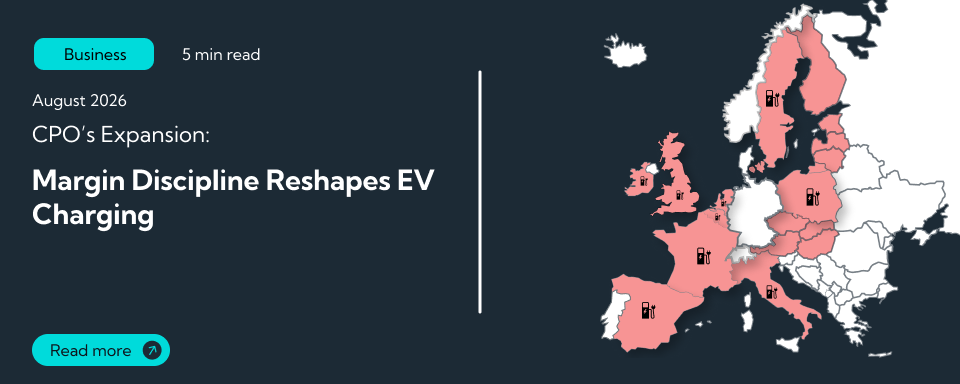
August 2026: Margin Discipline Reshapes EV Charging

Scaling EV Charging Without Scaling Complexity: Five Lessons from ORLEN

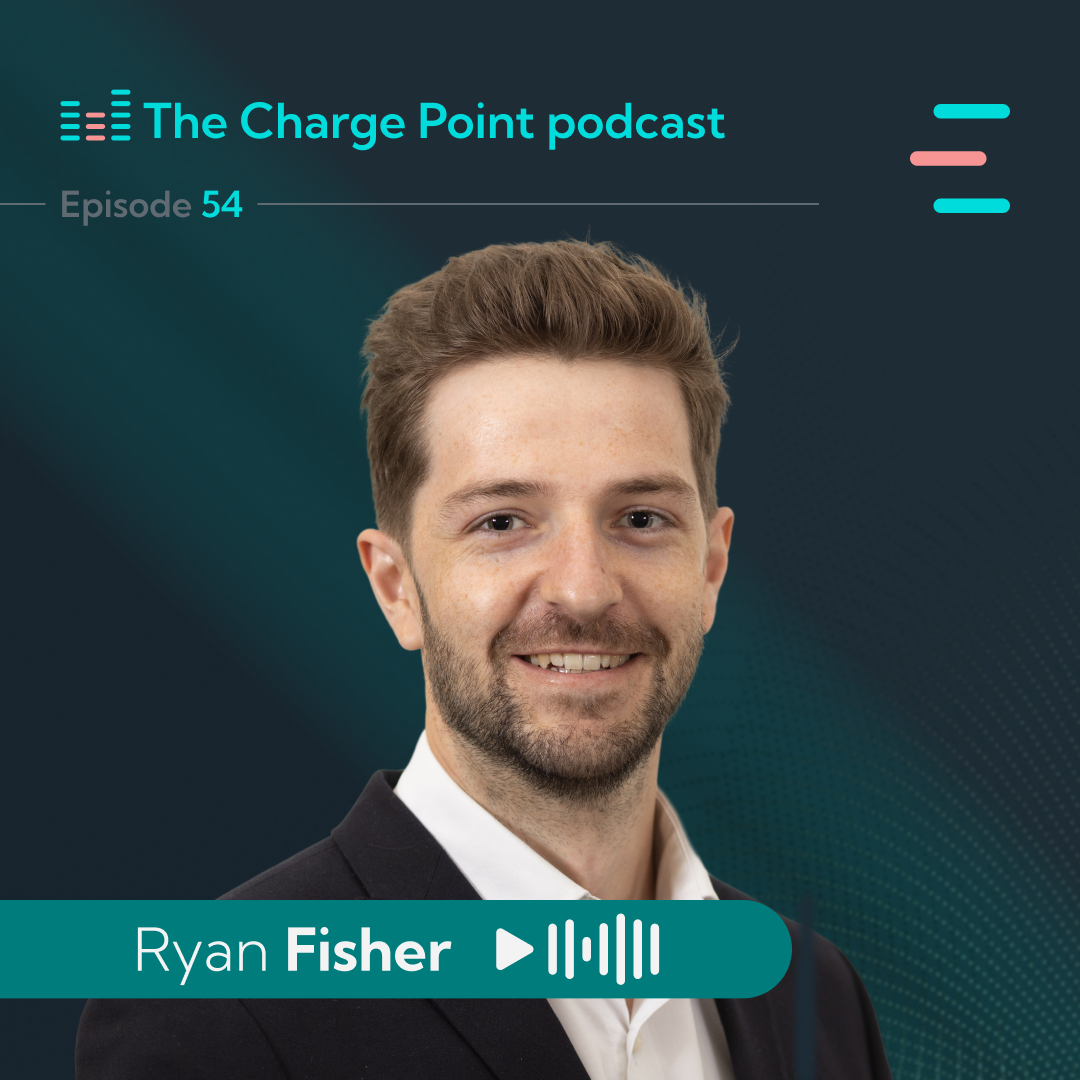
How Cheap Batteries Are Changing EV Charging Infrastructure - Interview with Ryan Fisher, BloombergNEF

Get started with
FLEXECHARGE
Contact our team to learn more about what we can help you achieve with our open, vendor agnostic platform and powerful solutions.