
Depots Will Carry Electric Truck Charging. Corridors Will Decide Whether It Scales.
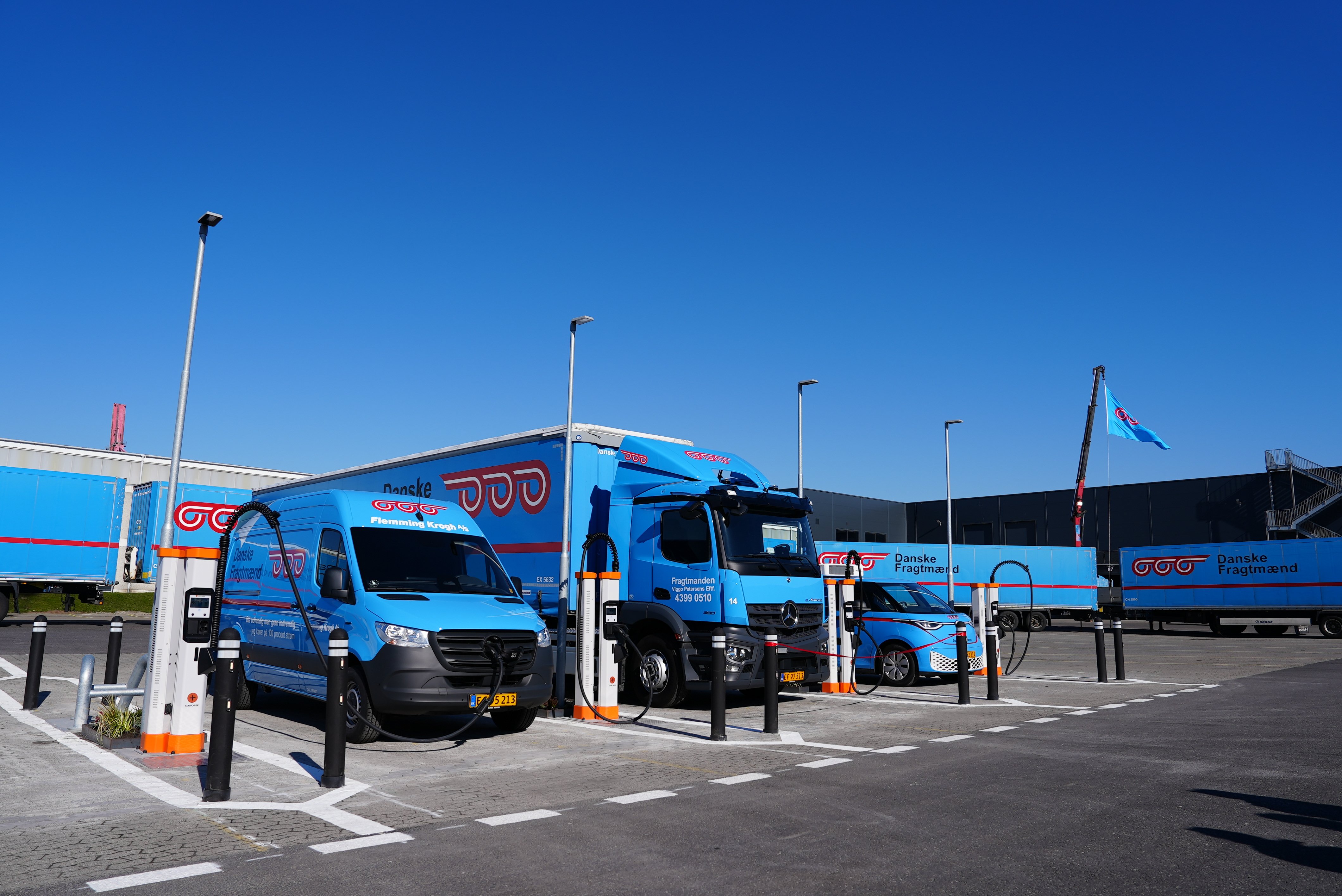
Depots will carry most of the energy for electric truck charging in Europe, but long-haul trucks depend on charging along the corridors, and that is where grid planning has to start now. By 2030, Europe will need more than 300,000 public and private charging points for medium and heavy-duty trucks, up from roughly 10,000 today, according to McKinsey's Center for Future Mobility. Most of the debate about that buildout, rightly, is about depots. The corridor problem gets far less attention than it deserves.
Key takeaways
- Depot charging typically makes up 70 to 80 percent or more of truck charging energy, according to the ICCT.
- Long-haul trucks rise from about 27 percent of Europe's electric truck stock in 2030 to about 50 percent by 2045, and they rely on en-route charging.
- Charging demand and grid strain concentrate in a few corridor and industrial hotspots, so grid investment has to run ahead of demand.
Why depot charging is the backbone of electric truck charging
A September 2026 study from Fraunhofer ISI and the ICCT finds depot charging makes up typically 70 to 80 percent or more of truck charging energy in every country it models. McKinsey reaches a similar view: before 2030, more than 90 percent of truck charging infrastructure will sit at or near fleet hubs.
Depots are a serious grid challenge too. The ICCT's example sites, such as Magdeburg, Venlo and Liege, are depot-dominated and still reach peaks of roughly 17 to 22 megawatts by 2035.
Why en-route truck charging matters beyond its share
Still, some trucks never go home at night. McKinsey estimates that multiday long-haul trucks are only about 5 percent of the electric fleet, but they depend heavily on public charging. And that share grows: in the ICCT's moderate scenario, long-haul rises from about 27 percent of Europe's electric truck stock in 2030 to about 50 percent by 2045.
Geography matters too. In smaller transit countries, the ICCT finds en-route charging can reach 30 to 50 percent of charging energy.
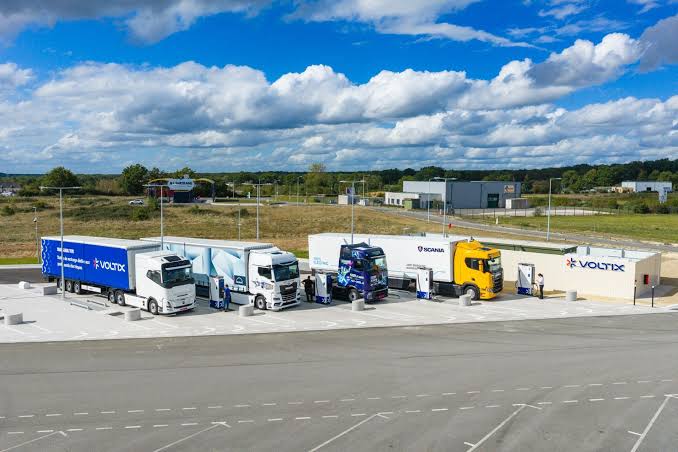
What en-route truck charging requires: megawatts and 45 minutes
"We cannot charge a truck with a tractor with its trailer on a DC charger for light vehicles," says Louis Dupasquier, CEO of Voltix and Easy Charge, both part of the Vinci Group, on Episode 58 of The Charge Point Podcast. "It just doesn't fit. So we need a dedicated infrastructure to charge electric trucks."
The design constraint is the mandatory driver break: 45 minutes after 4.5 hours of driving. Both McKinsey and the ICCT build their en-route models around it, and McKinsey assumes a 400 kilowatt charger. Voltix is already building past that, toward 600 to 800 kilowatts, with a path to a full megawatt per bay.
Grid connections: demand concentrates in a few corridor hotspots
The ICCT's most striking finding is concentration. The top 1 percent of its map hexagons capture roughly 25 to 33 percent of charging energy, and the top 10 percent capture 60 to 90 percent, mostly along freight corridors and industrial hubs.
That is why Louis points at the grid. "One of the rules, the European mindset we have to change, is the first-arrived, first-served rule," he says. "We should not wait anymore for people to ask for it." The ICCT reaches the same conclusion, calling current grid planning reactive and recommending investment ahead of demand in identified hotspots. McKinsey adds that upgrade lead times run from months to years, and that some countries have hundreds of distribution operators.
Louis also describes a bridge: on-site battery storage, so a station can open where the full connection is limited or delayed.
Depot versus corridor charging: volume versus value
The commercial picture needs care. McKinsey projects public fast charging as the biggest profit pool by 2030, around 500 million euros against 200 million for fleet hubs, because fleets pay a premium to minimise downtime during breaks. That measures value per kilowatt-hour. McKinsey also flags real commercial risk from slow long-haul adoption and large service areas. The ICCT's volumes say depots win on energy, which is why we spend so much of our own time on depot and logistics charging. Both can be true.
Voltix is building for the corridor case: universal stations with both MCS and CCS, a first site live this year, five countries by 2028, and a recent near-90-million-euro investment from Vinci Concessions, Épopée Gestion, and ADEME Investissement. As Louis puts it, "we are an infrastructure manager," used to thinking in decades.
Depot charging will carry most of the energy, and it deserves most of the early investment. A smaller share can still carry an outsized stake. En-route charging is what lets long-haul trucks go electric at all, and it concentrates demand and grid strain in a handful of corridor hotspots. That is where planning has to start now.
Hear the full conversation with Louis Dupasquier in Episode 58 of The Charge Point Podcast.
Sources
theicct.org – Spatiotemporal analysis of electric truck charging demand in Europe (Fraunhofer ISI and ICCT, September 2026)
McKinsey Center for Future Mobility – Building Europe's electric-truck charging infrastructure
What is Load Management and why is it essential for EV Charging
Explore the essentials of advanced Load Management in this guide. Uncover the complexities of integrating EV charging systems with existing power grids, a critical challenge in energy management. Discover how solid Load & energy management solutions ensure an efficient, secure, and scalable charging infrastructure.
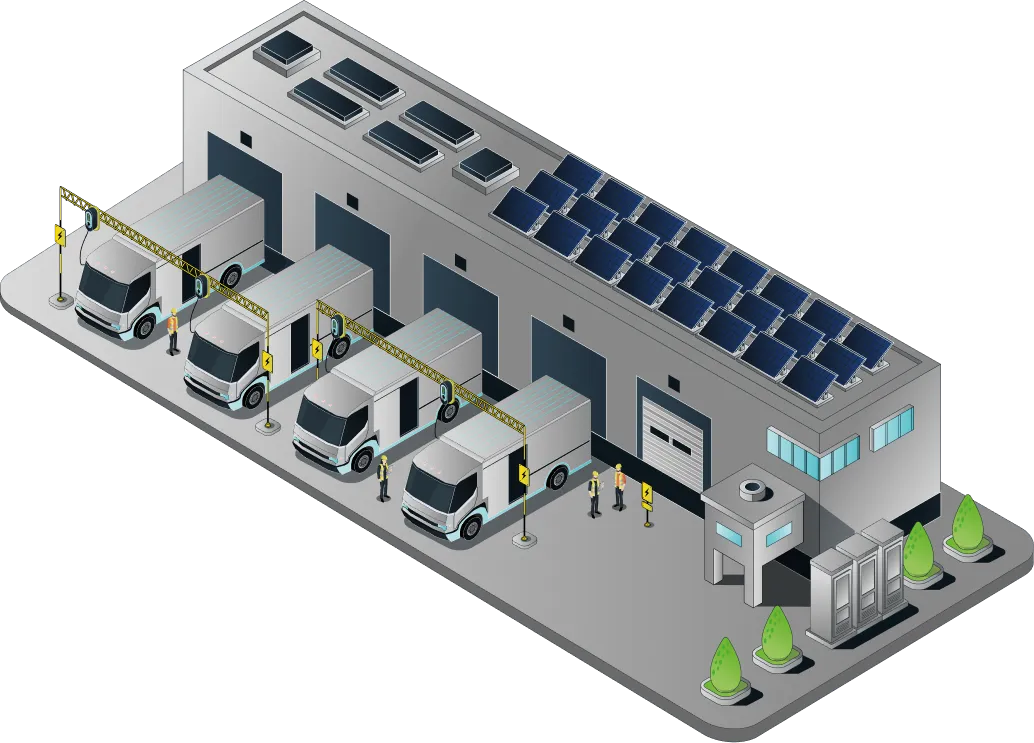
Turn your depot into an energy hub
Discover how FLEXECHARGE helps fleet operators manage peak loads and energy costs at logistics depots.
Interesting reads
Depots Will Carry Electric Truck Charging. Corridors Will Decide Whether It Scales.
September 2026: Financing Innovation Reshapes EV Charging

EV Charging's Next Bottleneck Isn't the Charger - It's Everything Around It
Battery Flexibility Revenue for CPOs in Belgium and the Netherlands: FLEXECHARGE and Yuso Join Forces

Get started with
FLEXECHARGE
Contact our team to learn more about what we can help you achieve with our open, vendor agnostic platform and powerful solutions.