
EV Charging's Next Bottleneck Isn't the Charger - It's Everything Around It
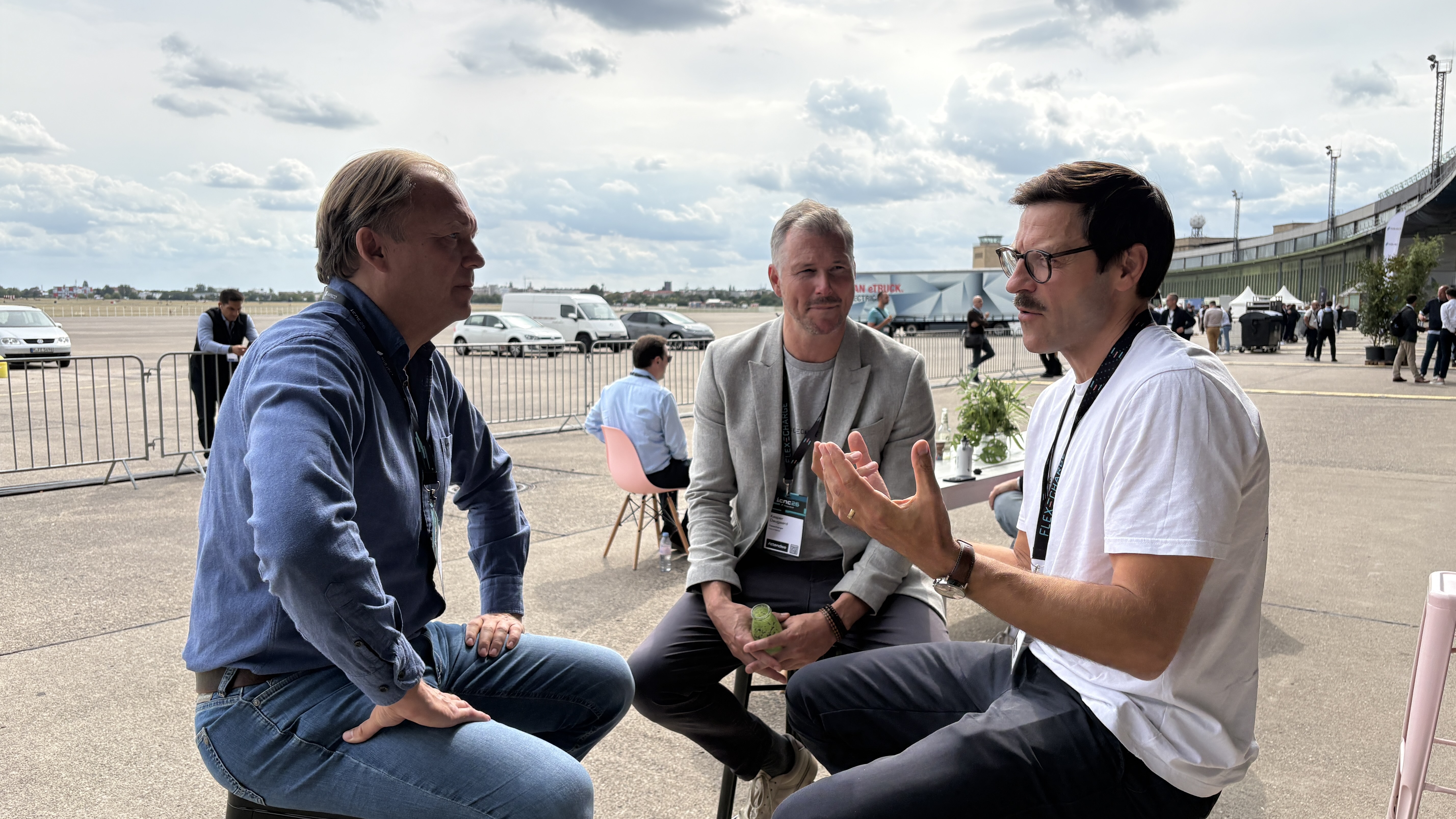
For most of the last five years, the central question in EV charging was simple: does it work? Does the charger start a session reliably? Does the network stay online? Is the hardware in the ground?
At ICNC26 in Berlin this September, that question had largely disappeared from the conversation. In its place: does it pay off, does it scale, and does it actually talk to itself. Four conversations recorded live on the show floor, with a grid-cost founder, an AI support CEO, an interoperability-testing founder, and an independent policy consultant, traced the same shift from four completely different angles. Put together, they make a fairly strong case that the next competitive edge in EV charging has nothing to do with the charger itself.
The Grid Cost Problem Nobody Standardized
Joakim Arvidsson, co-founder of Peak Energy, put it bluntly: grid connection costs are a hidden cost that almost nobody understands. Utility costs, the actual kilowatt-hours, are simple enough. Grid costs are not. Connection fees, transfer fees, and peak charges are defined differently by every distribution system operator, published, if at all, on scattered individual websites, with no shared standard for what counts as "peak" or how summer and winter rates compare.
The practical effect: operators either overpay because they don't understand their own cost structure, or they flatten their pricing to compensate and quietly erode the customer experience. Arvidsson traces the market's evolution in three phases: hardware rollout, then reliability and UX, and now cost and profit. Grid cost transparency sits squarely in that third phase, and almost nobody has solved it yet.
Cost-Cutting Is a Commodity Now
Bradford Crist, CEO and co-founder of ChargeMate, is seeing the same maturation from the support side. AI-driven driver support is everywhere now, but Crist argues most of it is aimed at the wrong target. "There's a lot of people able to offer lower costs with AI tools," he said. "That's cost of entry. What we're really focused on is providing an experience that recovers revenue and retains customers."
That distinction matters more than it sounds. Cutting support costs is table stakes - every vendor can promise it. Recovering revenue by keeping a frustrated driver from abandoning a network entirely is a fundamentally different, harder problem, and one that ties support directly to the P&L rather than treating it as a cost center to minimize.
The Testing Blind Spot
Oumaima Bounouadar, co-founder and CEO of OCPP Lab, is attacking a more technical version of the same maturity gap: interoperability testing. Before founding the company, she watched a basic OCPP or OCPI test consume up to 30 minutes and require a physical charger, an electric vehicle, and two specialized engineers - for a single basic scenario, not even an edge case.
Her sharper point, though, is about what gets tested at all. "The driver experiences the entire charging journey, not just an isolated component," she said, "and many issues only appear when those systems start interacting." Most testing today is unit-level or integration-level - individual components checked in isolation. But the failures that actually reach drivers tend to live in the gaps between systems, which is exactly where component-level testing doesn't look.
The Conversation CPOs Aren't Having
Jaap Burger, an independent EV grid-integration consultant, brought the clearest systemic view. Smart, unidirectional charging has gone from niche to near-default in depot and HGV business cases over the past two years, even attracting serious investor attention, which Burger called genuinely new. But he pointed to a widening gap: charge point operators are directly constrained by grid capacity, yet most still aren't bringing the resulting flexibility-value opportunity to regulators and DSOs as a real revenue conversation. The technology has outpaced the policy dialogue that would let it scale.
The Common Thread
None of these four problems - grid cost opacity, support economics, testing gaps, regulatory silence - is really about whether EV charging infrastructure works. Each is about what happens once it does: whether the economics hold up, whether the customer experience survives contact with the full system, and whether the industry can present a unified enough front to the regulators who control its next phase of growth.
That was, in effect, ICNC26's real theme underneath its official one. "Collaboration at Scale: Establishing the Open Smart Charging Ecosystem" isn't a slogan about plugs fitting sockets. It's an admission that the industry's hardest remaining problems are the ones that require operators, testers, support teams, and regulators to actually talk to each other, not just to drivers.
Discover the Episode 57 of the Charge Point Podcast

What is Load Management and why is it essential for EV Charging
Explore the essentials of advanced Load Management in this guide. Uncover the complexities of integrating EV charging systems with existing power grids, a critical challenge in energy management. Discover how solid Load & energy management solutions ensure an efficient, secure, and scalable charging infrastructure.

Interesting reads

EV Charging's Next Bottleneck Isn't the Charger - It's Everything Around It
Battery Flexibility Revenue for CPOs in Belgium and the Netherlands: FLEXECHARGE and Yuso Join Forces
.jpeg)
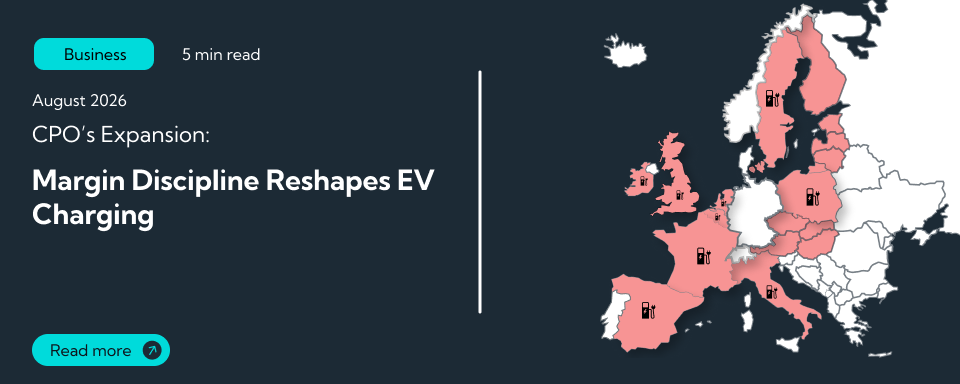
August 2026: Margin Discipline Reshapes EV Charging
Scaling EV Charging Without Scaling Complexity: Five Lessons from ORLEN

Get started with
FLEXECHARGE
Contact our team to learn more about what we can help you achieve with our open, vendor agnostic platform and powerful solutions.