
When Electric Fleets Outgrow the Grid: Why F-LOG Invests in FLEXECHARGE
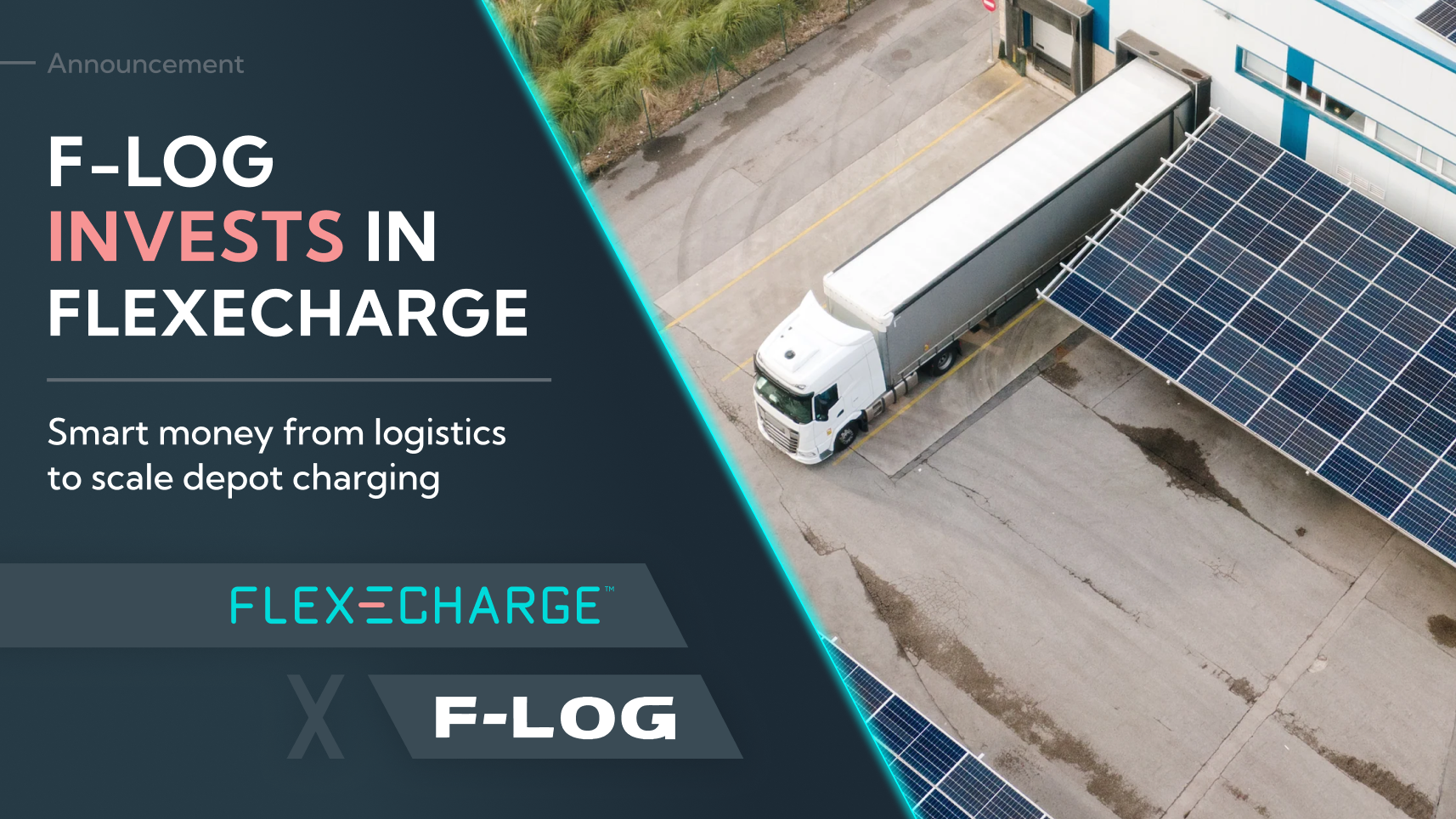
F-LOG, the early-stage venture fund backed by the FIEGE Group, has made a strategic investment in FLEXECHARGE. For us, it opens a new chapter: taking what we have built for charge point operators across Europe to logistics depots. It also says something about where the electric truck market is heading. As fleets grow, the hardest part of electrifying logistics is no longer the truck. It is the power to charge it.
Key takeaways
- F-LOG, the venture fund backed by the FIEGE Group, has made a strategic investment in FLEXECHARGE to scale depot charging for logistics fleets.
- Depot charging makes up 70 to 80 percent or more of electric truck charging energy in most European countries, according to the ICCT and Fraunhofer ISI.
- As electric fleets grow, grid capacity becomes the bottleneck, and energy management lets depots charge more trucks within their existing connection.
Why depot charging carries the load for electric trucks
The ICCT and Fraunhofer ISI find that depot charging makes up 70 to 80 percent or more of electric truck charging energy in most European countries. McKinsey expects more than 90 percent of truck charging infrastructure to sit at or near fleet hubs before 2030. Germany is set to become the largest market.
Depot charging providers see the same pattern on the ground in Germany. Charging at the depot costs 10 to 15 cents less per kilowatt-hour than public charging, and it fits into the processes logistics companies already run. Charging at a public hub in an industrial area means moving trucks around, which interferes with the working day.
Why grid capacity is the bottleneck for depot charging
Electrifying one truck is easy. Electrifying a fleet on one site is a different game. "If you're then talking about 10 trucks or 20 trucks or 50 trucks operating out of that one site, that's an unbelievable amount of power. It's the power that's required to power a small town," said David Watts of Pelican Engineering on Episode 20 of The Charge Point Podcast.
In Germany, that power is hard to get. Some grid operators now quote connection dates as late as 2033. A planned change would make it harder still: connections above 1 megawatt would be scored against each other in periodic allocation rounds, while smaller ones stay first come, first served. The stakes reach beyond charging. Within a few years, a logistics site without enough grid capacity may lose much of its value.
How energy management shrinks the grid problem
The good news is that most depots need far less peak power than fleet operators fear. Take 40 trucks driving 200 kilometres a day: they need about 8 megawatt-hours over a 14-hour standstill. That calls for no megawatt charging, and with load balancing and energy management, the required connection drops further. With battery prices down by more than half, many new depot sites are now planned just under 1 megawatt, with battery storage covering the peaks.
David's advice is to plan for the end point: size the grid connection for the 20 trucks you will run in 15 years. The first four are the easy part.
This is where FLEXECHARGE comes in. HARMON-E in the cloud and GATEWAY on site orchestrate chargers, battery storage, solar and fleet schedules, so every truck is ready for its next shift within the connection the site already has. The technology is already proven at scale with charge point operators across Europe. For depots, it now adapts to the rhythm of logistics: shifts, routes and departure times.
Why logistics needs investors who know the industry
The first electric trucks usually charge without trouble. The pressure builds as the fleet grows: peaks rise, the grid connection reaches its limit, and every truck that is not ready on time puts a delivery at risk. Logistics companies are going through the same learning curve as the passenger car market, at a faster pace. Downtime costs them money, and Mittelstand companies share their lessons with each other.
F-LOG saw the potential of a proven technology, and it knows logistics from the inside. "Electrifying logistics is one of the defining challenges for our industry, and energy is a core focus for F-LOG. FLEXECHARGE brings proven technology and a clear ambition in depot charging. We are pleased to welcome the team to our portfolio," says Andreas Pott, Managing Partner at F-LOG.
"We look for founders we can help with more than money. FLEXECHARGE has a strong product for orchestrating charging and energy, and depot electrification is one of the biggest challenges our industry faces. We look forward to opening logistics doors for the team," adds Daniel Granados-Krudewig, Investment Manager at F-LOG.
For FLEXECHARGE, the investment opens the next stage of our growth. "After our success with charge point operators, depots are our next chapter," says Max Brandt, CEO and co-founder of FLEXECHARGE. "F-LOG brings knowledge, a strong network and access to the logistics ecosystem it is already part of. That is the kind of smart money that helps us move faster with the operators who need us most."
What comes next for depot charging
Some in the industry expect electric trucks to grow from 3 to 4 percent of the trucks on the road today to 10 to 12 percent by the end of 2028. Most of them will charge at depots.
We will share more news about our depot charging work early next year. Until then, see how we help fleet operators turn depots into energy hubs on our depot charging page, read our analysis of depots versus corridors, and listen to Episode 20 of The Charge Point Podcast.
What is Load Management and why is it essential for EV Charging
Explore the essentials of advanced Load Management in this guide. Uncover the complexities of integrating EV charging systems with existing power grids, a critical challenge in energy management. Discover how solid Load & energy management solutions ensure an efficient, secure, and scalable charging infrastructure.
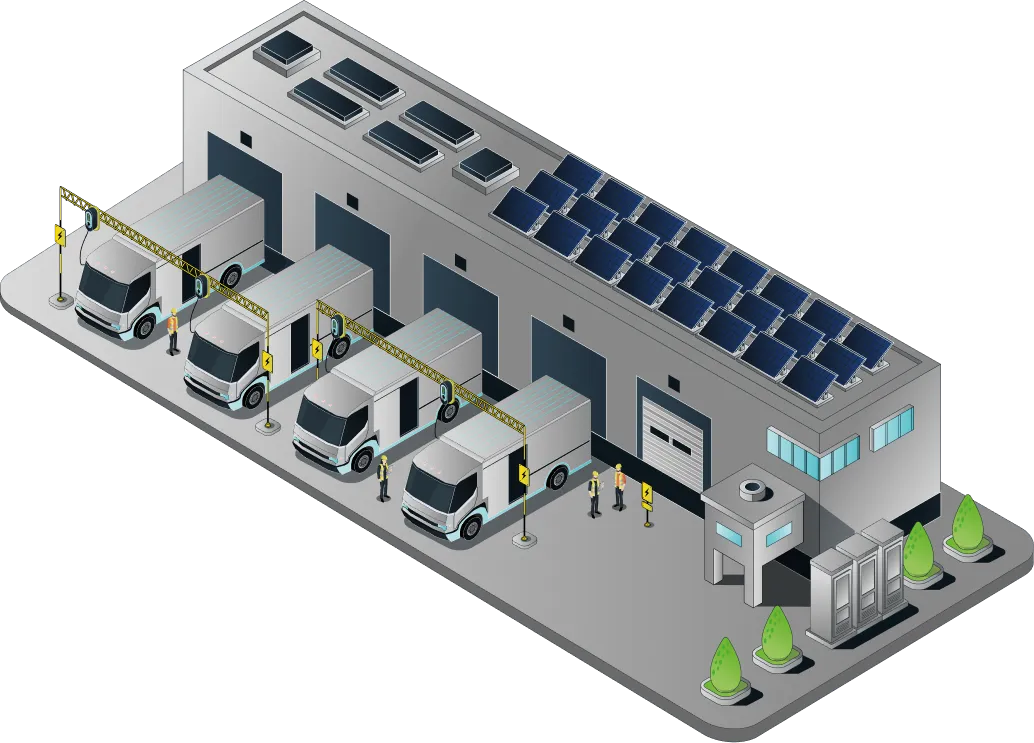
Turn your depot into an energy hub
Discover how FLEXECHARGE helps fleet operators charge more electric trucks within their existing grid connection.
Interesting reads

When Electric Fleets Outgrow the Grid: Why F-LOG Invests in FLEXECHARGE
October 2026: Megawatt Charging Moves From Pilot to Product
Depots Will Carry Electric Truck Charging. Corridors Will Decide Whether It Scales.
September 2026: Financing Innovation Reshapes EV Charging

Get started with
FLEXECHARGE
Contact our team to learn more about what we can help you achieve with our open, vendor agnostic platform and powerful solutions.