
How to Generate New Revenue Streams With Battery Energy Storage Systems (BESS) on EV Charging Sites

Why Battery Storage Management is essential for EV charging sites
High-power charging creates steep demand peaks that increase tariffs and pressure grid connections. Integrating a battery charging system for electric vehicles with a co-located Battery Energy Storage System (BESS) enables operators to stabilise power flows, reduce peak demand charges, and avoid costly grid upgrades.
With a BESS energy management system, the battery charges when electricity is cheap, discharges during expensive periods, and supports participation in flexibility markets, turning on-site storage into a new revenue engine.
What is Battery Energy Storage Systems
A Battery Energy Storage System (BESS) is a co-located battery storage system that stores electricity and delivers it when an EV charging site requires additional power. It operates as an EV charging battery system, providing short bursts of high power during peaks and improving charging stability, grid compliance, and operational cost control.
How do Battery Energy Storage Systems work
A BESS charges during low-price or low-demand hours and discharges during load spikes, ensuring the site stays within its grid limit and helping reduce peak demand charges.
The system is continuously supervised by an intelligent battery management system combined with advanced battery energy management logic.
The battery is controlled by an energy storage control system, such as FLEXECHARGE’s HARMON-E platform, which communicates via Modbus TCP, API, or MQTT to decide when the battery should charge, discharge, or remain idle. This enables full value stacking: peak shaving, arbitrage, boosting, DNO curtailment compliance, and participation in flexibility markets.
How Battery Energy Storage Systems unlock new revenue streams for charging sites
Battery Energy Storage Systems do more than support EV chargers. They actively improve the financial performance of charging sites. By combining cost savings with new revenue opportunities, a well-managed BESS becomes a strategic asset that strengthens both profitability and grid resilience. The most important revenue streams for charging sites include:
Direct revenue streams
- Ancillary service participation (FCR, FFR, aFRR, mFRR) providing fast-response power to the grid.
- Flexibility revenues through VPP aggregation, where multiple batteries act as one large asset.
- Local DNO/DSO flexibility programs that reward sites for reducing or shifting demand during congestion.
Cost reduction benefits
- Tariff arbitrage, charging when prices are low and discharging when they rise.
- Reduced peak demand charges by shaving or smoothing high-load events.
- Avoiding costly grid upgrades by using co-located battery storage to support high-power demand.
- Lower operational costs through more stable and predictable energy usage.
Operational and commercial advantages
- Power boosting to maintain high charging speeds within grid limits.
- Faster site deployment in areas with grid constraints or limited capacity.
- Improved charging reliability and uptime, increasing customer throughput.
- Higher overall site profitability through intelligent value stacking managed by systems like HARMON-E.
This is already becoming a reality for operators such as Recharge, which, together with Flower as the balancing service partner, uses HARMON-E to dynamically adjust power across its public fast-charging network and participate in flexibility markets without affecting the driver experience.
Also with Q8 (BeNeLux), where HARMON-E optimises energy flows across the charging network by shifting consumption to low-price hours and reducing grid strain through intelligent load and battery management.
Applications of BESS for high-power EV charging sites
Battery Energy Storage Systems enable high-power charging sites to operate more efficiently, reliably, and profitably, especially where grid capacity is limited or electricity prices fluctuate. The key applications include:
Peak shaving and load management
A BESS discharges during high-load moments to keep total site consumption below grid limits. This prevents overloads, reduces peak demand charges, and avoids costly grid reinforcements.
Tariff arbitrage
The battery charges when electricity prices are low and discharges when prices rise. This lowers energy costs and stabilises operating expenses, especially in volatile markets.
Power boosting
BESS supports chargers during periods of high instantaneous demand, allowing sites to deliver maximum charging power even with constrained grid connections.
Flexibility and ancillary services
When not fully used for charging operations, the BESS can provide fast-response power to the grid, participating in FCR, FFR, and other flexibility programs, creating additional revenue streams.
DNO curtailment compliance
During grid curtailment, the battery supplies power to chargers while preventing any feed-in to the grid, maintaining operations without violating distribution constraints.
Solar integration
When paired with on-site PV, a BESS stores excess solar energy and uses it to support charging, reducing grid consumption and improving energy self-consumption.
How FLEXECHARGE controls and optimises BESS for EV Charging Sites
FLEXECHARGE’s HARMON-E platform turns a BESS from a simple stationary battery into a fully optimised, multi-use energy asset. Instead of allowing the battery to serve only one function, HARMON-E continuously selects the most valuable action: maximising revenue, reducing costs, and ensuring charging performance.
To achieve this, HARMON-E performs a wide range of intelligent control functions:
Core capabilities of HARMON-E
- Real-time state of charge (SoC) management: Ensures enough energy is available for site operations while preserving battery health.
- Dynamic charging and discharging decisions:Automatically charges when electricity is cheap and discharges when prices spike or the site load is high.
- Peak shaving & power boosting: Keeps site consumption under the grid limit while maintaining maximum charging power.
- Automated participation in flexibility & ancillary markets: Enables FCR, FFR, aFRR, and mFRR participation through instant response and market-compliant activation.
- Multi-Objective optimisation engine: Prioritises between arbitrage, peak shaving, boosting, and grid services to maximise overall value.
Market and network integration
- Dynamic market bidding: Forecasts prices, demand, and grid signals to place optimal bids in reserve markets.
- Virtual Power Plant (VPP) aggregation: Combines many small BESS units into a single multi-MW flexibility asset.
- Fully vendor-agnostic control: Integrates any BESS or charger brand through Modbus TCP, API, or MQTT, removing vendor lock-in.
FLEXECHARGE already integrates with certified BESS partners including Pixii, Intercel, Elecnova, Polarium, Enico, and Xolta, ensuring total freedom of choice for CPOs.
Operational safeguards
- Battery lifetime protection: Built-in SoC safety layers and charge/discharge limits extend battery life.
- DNO curtailment compliance: Ensures no grid feed-in when prohibited and maintains charging operations during curtailment.
By combining these capabilities, HARMON-E uses the battery exactly when and where it creates the most value, turning EV charging sites into flexible, revenue-generating energy hubs.
Unlock the full value of battery storage with FLEXECHARGE
Co-located BESS has become essential for operating profitable fast-charging sites.
With HARMON-E, CPOs gain a unified battery management system, full multi-market optimization, and a future-proof way to maximise the value of on-site storage, turning BESS into a strategic, recurring-revenue asset.
👉 Watch the webinar: Battery Storage for EV Charging – From Grid Constraints to Revenue Creation
👉 Explore the webinar: The Power of Co-Located Batteries – Unlocking the Full Revenue Potential
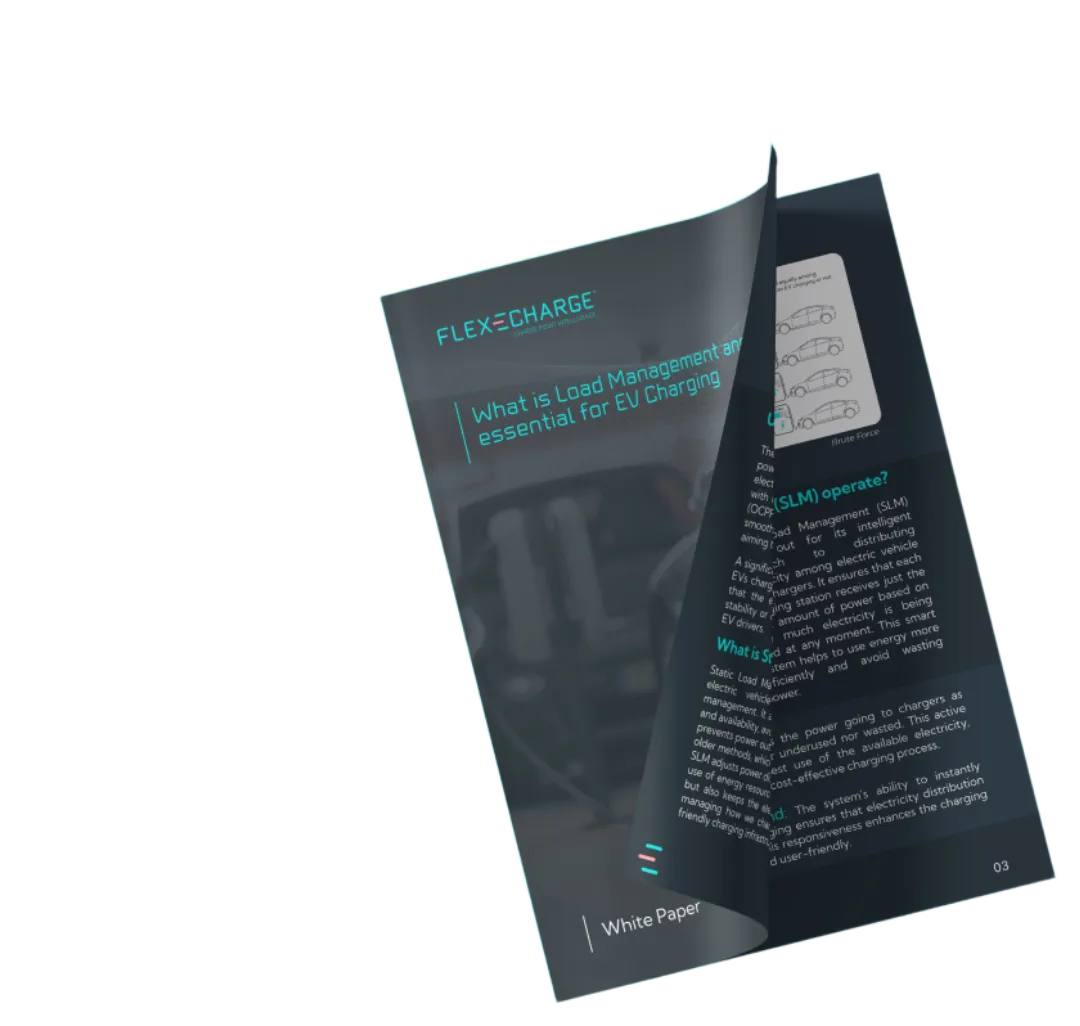
What is Load Management and why is it essential for EV Charging
Explore the essentials of advanced Load Management in this guide. Uncover the complexities of integrating EV charging systems with existing power grids, a critical challenge in energy management. Discover how solid Load & energy management solutions ensure an efficient, secure, and scalable charging infrastructure.
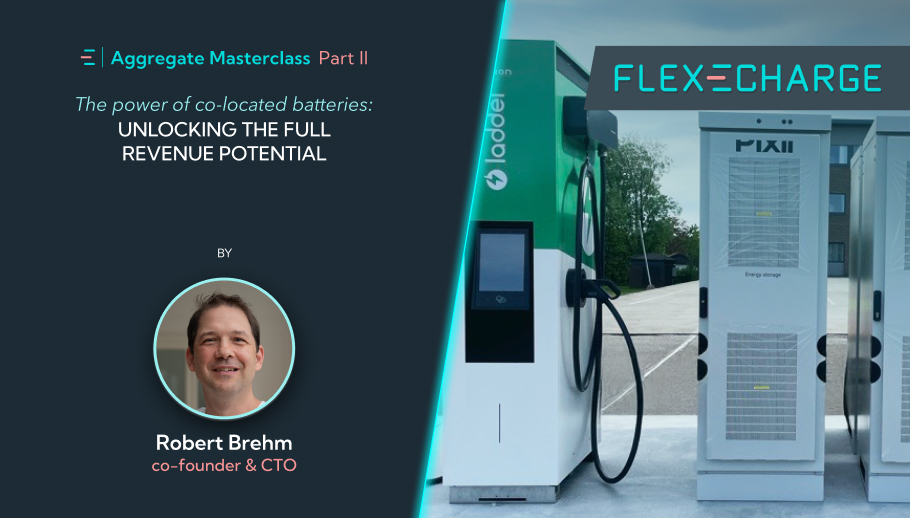
The power of co-located batteries: unlocking the full revenue potential
Unlock new revenue streams and reduce energy costs with co-located Battery Energy Storage Systems (BESS) for EV charging sites. Learn how intelligent energy management enables peak shaving, tariff arbitrage, flexibility market participation, and grid-compliant operation. Powered by HARMON-E.
Interesting reads
Battery Flexibility Revenue for CPOs in Belgium and the Netherlands: FLEXECHARGE and Yuso Join Forces
.jpeg)
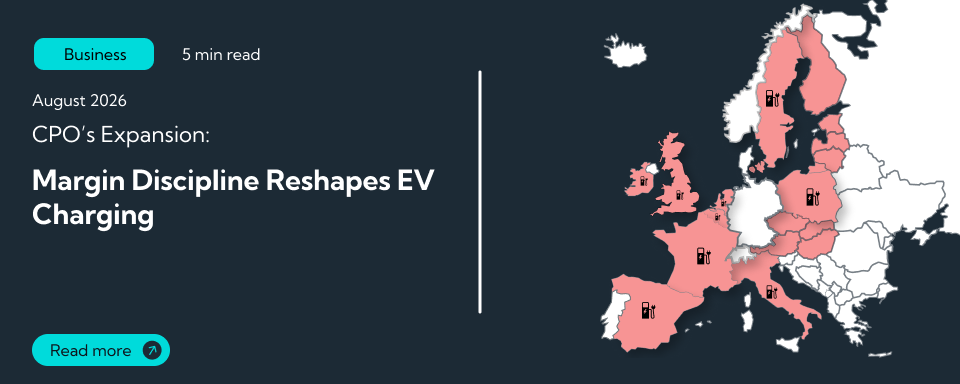
August 2026: Margin Discipline Reshapes EV Charging
Scaling EV Charging Without Scaling Complexity: Five Lessons from ORLEN
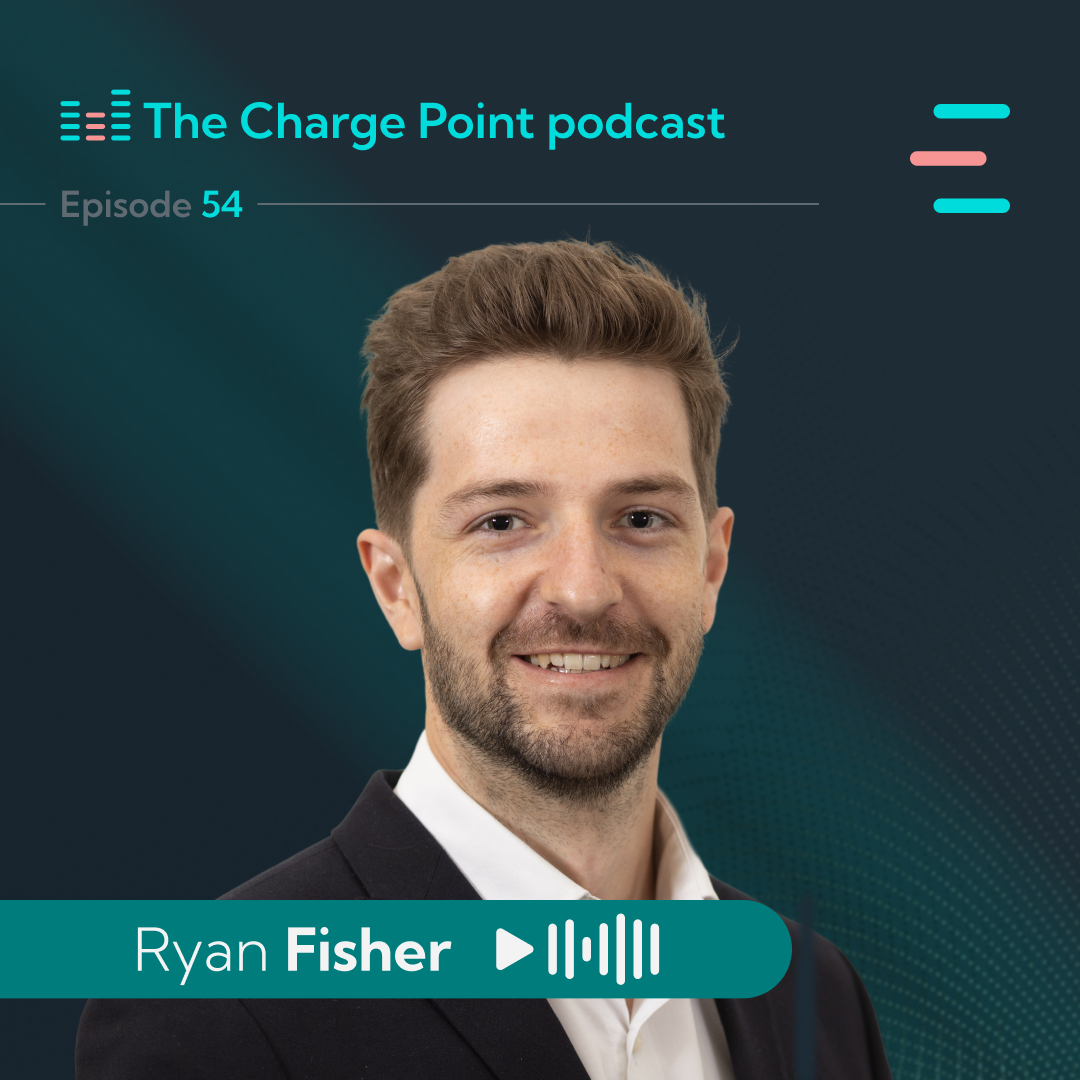
How Cheap Batteries Are Changing EV Charging Infrastructure - Interview with Ryan Fisher, BloombergNEF

Get started with
FLEXECHARGE
Contact our team to learn more about what we can help you achieve with our open, vendor agnostic platform and powerful solutions.