
May 2026: Infrastructure Financing and Grid Integration Drive European Charging Sector Maturation
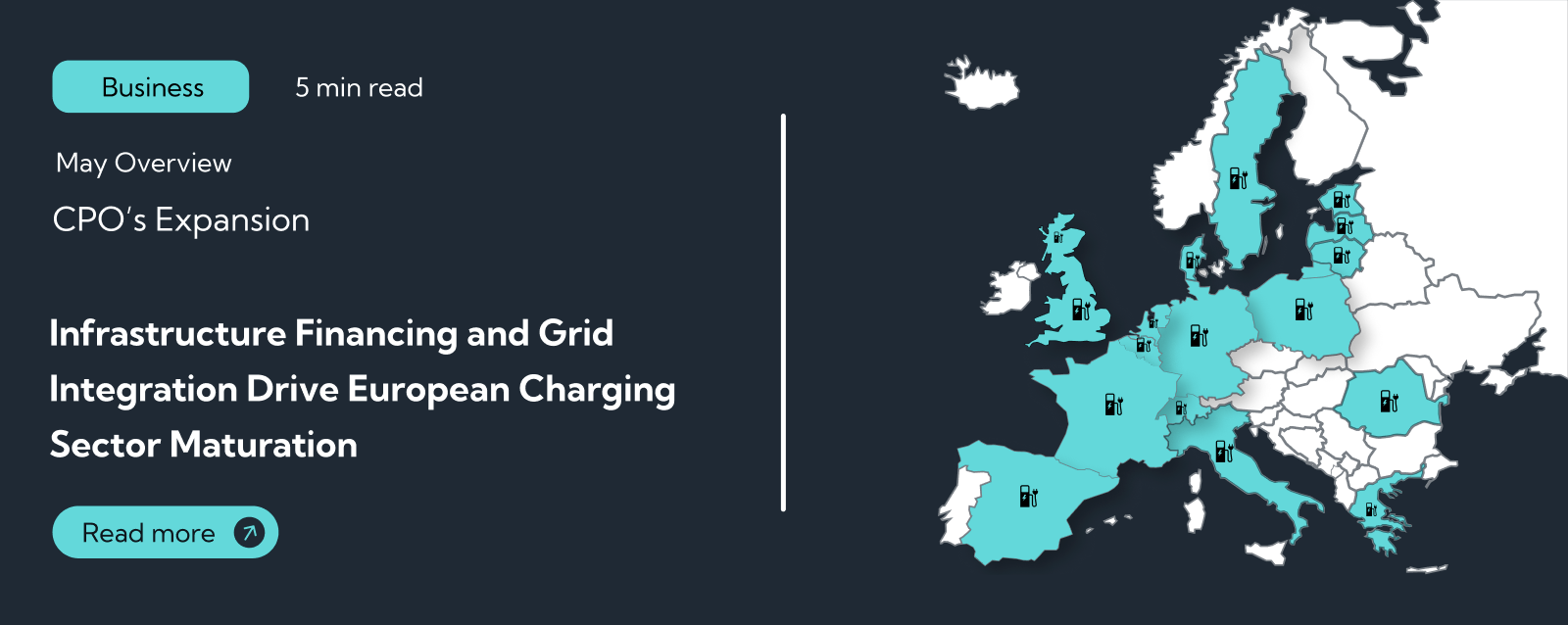
May 2026: Infrastructure Financing and Grid Integration Drive European Charging Sector Maturation
May 2026 marked a critical transition for Europe's charging infrastructure sector as operators secured substantial capital to fund expansion while simultaneously confronting grid capacity constraints that threaten deployment timelines. From InstaVolt's £250 million refinancing to Germany's €1 billion truck charging programme and Milence's €120 million European expansion facility, the month demonstrated how institutional capital is treating charging networks as mature infrastructure assets.
However, Spain's revelation that over 17,000 installed chargers remain non-operational due to grid delays exposes the sector's binding constraint: grid connection bottlenecks now determine project viability more than capital availability or site acquisition speed.
Multi-Regional / Europe-Wide
InstaVolt Secures £250M Financing to Expand UK Network and Energy Storage
InstaVolt closed a £250 million debt facility led by KfW IPEX-Bank, supporting ultra-rapid hubs and battery storage across 2,600 sites with 1,100 under construction. The equity-to-debt shift drops capital costs from 15-20% to sub-10%, improving site IRRs by 5-10 percentage points and enabling lower-utilisation sites. Battery storage addresses grid constraints blocking high-power connections, enabling deployment where upgrades would delay projects 18-24 months.
Milence Secures €120M to Expand European Truck Charging Network
Milence secured €120 million to accelerate heavy-duty charging deployment, supporting new sites and Megawatt Charging System rollout across 34 hubs in eight countries. HGVs consuming 300-500 kWh generate 3-5x revenue per session versus passenger vehicles, with fleet contracts eliminating demand risk. However, megawatt grid connections require 12-18 month approvals and capex 40-60% higher, making freight corridor location selection critical.
Kempower and Circle K Expand Ultra-Fast Charging Partnership
Kempower and Circle K expanded their partnership across additional European markets beyond Sweden and Norway. For fuel retailers, operational uptime becomes the primary metric as customers expect 99%+ reliability. Circle K's high-traffic sites provide 20-30% higher utilisation through guaranteed footfall, while multi-supplier strategies reduce vendor dependency and improve procurement leverage 15-20% on equipment costs.
Northern Europe
United Kingdom
E.ON Expands UK Presence Through Planned OVO Acquisition
E.ON's acquisition of OVO Energy adds four million energy supply contracts, combining retail supply with charging operations supported by seven million smart meters. For utilities, retail relationships reduce customer acquisition costs 30-40% versus standalone charging subscriptions, while smart meter data improves demand forecasting for site selection. V2G aggregation becomes viable only when operators control both energy supply and charging access.
Reading Launches Major Residential Charging Rollout
Reading partnered with char.gy to deploy 2,600 residential points in dense urban areas without off-street parking. Residential charging presents utilisation 40-50% lower than destination sites, but LEVI subsidies covering 75% of capex improve IRRs to 12-15%. Success requires aggregating multiple municipal contracts to reduce per-site overhead from £8-12k to £4-6k annually through route optimization.
Gridserve Opens UK's First Public HGV Charging Hubs
Gridserve inaugurated public electric HGV hubs at Extra Baldock and Moto Exeter, with seven planned for 2026. A single HGV generates 3-5x revenue per session (£180 vs £24 for passenger EVs at £0.60/kWh), but one 350 kW charger consumes power equivalent to 7-10 passenger chargers. Megawatt connections require 18-24 months and £200-500k grid costs. Motorway sites with 50+ daily HGV visits achieve 15-18% IRRs.
Central & Western Europe
Germany
Germany Launches €1B Electric Truck Charging Programme
Germany introduced €1 billion funding for heavy-duty charging through 2030, supporting depot and public networks including grid connections and energy storage. Government programmes reduce upfront capital by 60-75% but introduce execution risk when grid timelines exceed deployment schedules. Operators now demand DNO grid commitments before site selection, or negotiate subsidy terms tying disbursement to operational activation rather than installation milestones.
France
France Targets 30,000 Fast Chargers by 2035 Including Truck Infrastructure
France targets 30,000 fast points by 2035, including 8,000 chargers for trucks exceeding 800 kW. Atlante partnered with Powerdot to integrate 7,500 French points through unified platforms. Government frameworks provide 5-7-year deployment visibility, enabling capex planning, but create winner-take-all tender dynamics that favor operators with balance sheets capable of absorbing €50-100M upfront before subsidy reimbursement. Roaming agreements expand the customer base by 40-60% but compress margins by 8-12%.
Netherlands
Allego Launches Smart Charging Across 4,500 Dutch Points
Allego introduced overnight smart charging across 4,500 points to reduce grid pressure. Intelligent load management delivers three value streams: flexibility markets generating €200-400 per connection annually, energy arbitrage capturing €0.15-0.25/kWh spread, and deferring grid upgrades averaging €30-50k per site. At 4,500 points, Allego enables VPP aggregation reaching 45-90 MW, sufficient for frequency regulation markets requiring 10 MW minimum bids.
Allego and HORNBACH Deploy 160 Fast Chargers Across Dutch Retail Network
Allego partnered with HORNBACH to install 160 fast chargers at 150 kW across 20 Dutch DIY locations by Q4 2026, addressing grid congestion through retail co-location rather than waiting 18-24 months for standalone approvals. Retail partnerships deliver predictable utilisation through store footfall (15-25% conversion of parking to charging), zero land cost versus £50-100k annual rent, and extended 45-90 minute dwell times.
Mediterranean / Southern Europe
Spain
Spanish Infrastructure Challenges: 17,000 Chargers Remain Non-Operational
ANFAC reported 17,000 installed Spanish chargers remain inactive due to grid delays—representing 30% of capacity. This represents catastrophic capital destruction: chargers generate zero revenue while incurring €200-400 monthly costs, destroying €40-60M annually. Operators prioritized installation velocity over grid assessment. Successful operators now demand written DNO confirmation before installation or negotiate subsidy terms that tie disbursement to activation. The Spanish government awarded €14.8M to Wenea and €13M to Zunder, though success depends on resolving 18-24 month grid delays.
Wenea Shifts to High-Capacity Hub Strategy
Wenea announced 11 high-capacity hubs with up to 32 points delivering 360 kW, abandoning geographic expansion for utilisation focus. A single 32-point hub achieving 25% utilisation generates superior returns to four 8-point sites averaging 12% despite equivalent capacity. Concentrated assets reduce overhead through centralized maintenance, improve energy procurement leverage, enabling direct PPAs, and justify premium grid connections. This signals a fundamental shift in performance measurement: from installation velocity to utilisation rates and EBITDA per kW
Acciona Secures Madrid Ultra-Rapid Hub Contract
Acciona secured a contract for a 4 MW ultra-rapid hub along Madrid's M-30 with up to 20 chargers, solar, and battery storage. Dense city centres achieve 35-45% utilisation versus 15-20% suburban, justifying 4 MW connections costing €300-500k. The model works only where sustained high utilisation is achievable—typically 5,000+ daily vehicle passages. Lower-density areas face identical costs but 60-70% lower utilisation, creating negative unit economics.
Elecsum Opens Large-Scale Barcelona Charging Hub
Elecsum inaugurated one of Catalonia's largest hubs at Baricentro shopping centre with 55 points exceeding 1 MW. High-capacity retail hubs deliver 20-30% utilisation versus 8-12% for dispersed networks, improving site IRR from marginal 6-8% to acceptable 15-18%. Retail locations provide steady baseline demand, 60-120 minute dwell times enabling lower-cost energy procurement, and partnerships reducing land costs to zero.
Italy
Renexia Recharge and Atlante Expand A24/A25 Motorway Network
Renexia Recharge and Atlante expanded charging along Italy's A24 and A25 motorways with 20 points across three service areas. Stations integrate Atlante's EnergyArk battery storage supporting future 360 kW charging despite grid limitations. Battery-buffered charging trades 25-35% higher upfront capex for 18-30 month time savings on grid approvals. Economics work on high-traffic corridors achieving 25%+ utilisation where time-to-revenue justifies premium costs.
Italy Sees Declining Fast Charging Prices as Competition Intensifies
Italy is experiencing DC and HPC prices declining 8-12% as competition increases. The trend compresses gross margins from 35-40% to 25-30%. For operators, this necessitates sophisticated energy procurement strategies—direct PPAs, flexibility markets, demand response—and operational efficiency to maintain EBITDA margins as revenue per kWh declines. The market bifurcates: large integrated operators with procurement sophistication maintain margins while smaller networks face erosion.
Portugal
Portugal Sets MOBI.E Charging Usage Record
MOBI.E recorded 898,000 sessions in April 2026, a new record. Portugal operates 14,750 points with fast and ultra-fast representing 40%. The figures validate early investments in standardized roaming infrastructure: interoperability eliminates customer acquisition friction, enabling network effects where any operator benefits from ecosystem growth. For operators in fragmented markets, Portugal demonstrates how open platforms accelerate utilisation ramp-up by expanding addressable customer base.
Looking Ahead
May 2026 exposes European infrastructure's fundamental tension: capital is available, but grid capacity is not. InstaVolt's £250M and Milence's €120M demonstrate institutional confidence. However, Spain's 17,000 non-operational chargers reveal the binding constraint: grid delays determine success. Operators must develop three capabilities: grid readiness assessment with DNO commitments before deployment; operational activation rates over installation velocity; and energy management sophistication as Italy's price compression shows procurement and flexibility capabilities are table stakes. The sector bifurcates: operators with scale, grid expertise, and energy management consolidate share while smaller networks face margin erosion.
Stay informed about the latest developments in EV charging by subscribing to The Charge Point Journal. Have updates or insights to share as a CPO? Contact us at hello@flexecharge.com.
Sources
InstaVolt financing and operational updates
KfW IPEX-Bank press materials
Milence expansion announcements
Kempower partnership updates
E.ON acquisition communications
Believ infrastructure developments
Reading Council LEVI projects
Gridserve Electric Freightway programme
RAW Charging partnerships
German Ministry funding programmes
EnBW supplier agreements
Atlante network integration
French government policy announcements
Allego smart charging and retail partnerships
HORNBACH collaboration updates
Electra Netherlands expansion
ANFAC infrastructure reports
Spanish government subsidy allocations
Wenea strategic updates
Plenitude corridor development
Acciona project announcements
Elecsum hub launches
Renexia Recharge expansion
Italian market monitoring reports
Portuguese MOBI.E network statistics
Various CPO company websites and official announcements

What is Load Management and why is it essential for EV Charging
Explore the essentials of advanced Load Management in this guide. Uncover the complexities of integrating EV charging systems with existing power grids, a critical challenge in energy management. Discover how solid Load & energy management solutions ensure an efficient, secure, and scalable charging infrastructure.

What is Load Management and why is it essential for EV Charging
Explore the key developments shaping Europe’s EV charging sector in May 2026. From major infrastructure financing and truck charging investments to grid connection challenges and smart energy management, discover the trends driving the next phase of charging network growth.
Interesting reads
Battery Flexibility Revenue for CPOs in Belgium and the Netherlands: FLEXECHARGE and Yuso Join Forces
.jpeg)
August 2026: Margin Discipline Reshapes EV Charging

Scaling EV Charging Without Scaling Complexity: Five Lessons from ORLEN
How Cheap Batteries Are Changing EV Charging Infrastructure - Interview with Ryan Fisher, BloombergNEF

Get started with
FLEXECHARGE
Contact our team to learn more about what we can help you achieve with our open, vendor agnostic platform and powerful solutions.